Import Desk
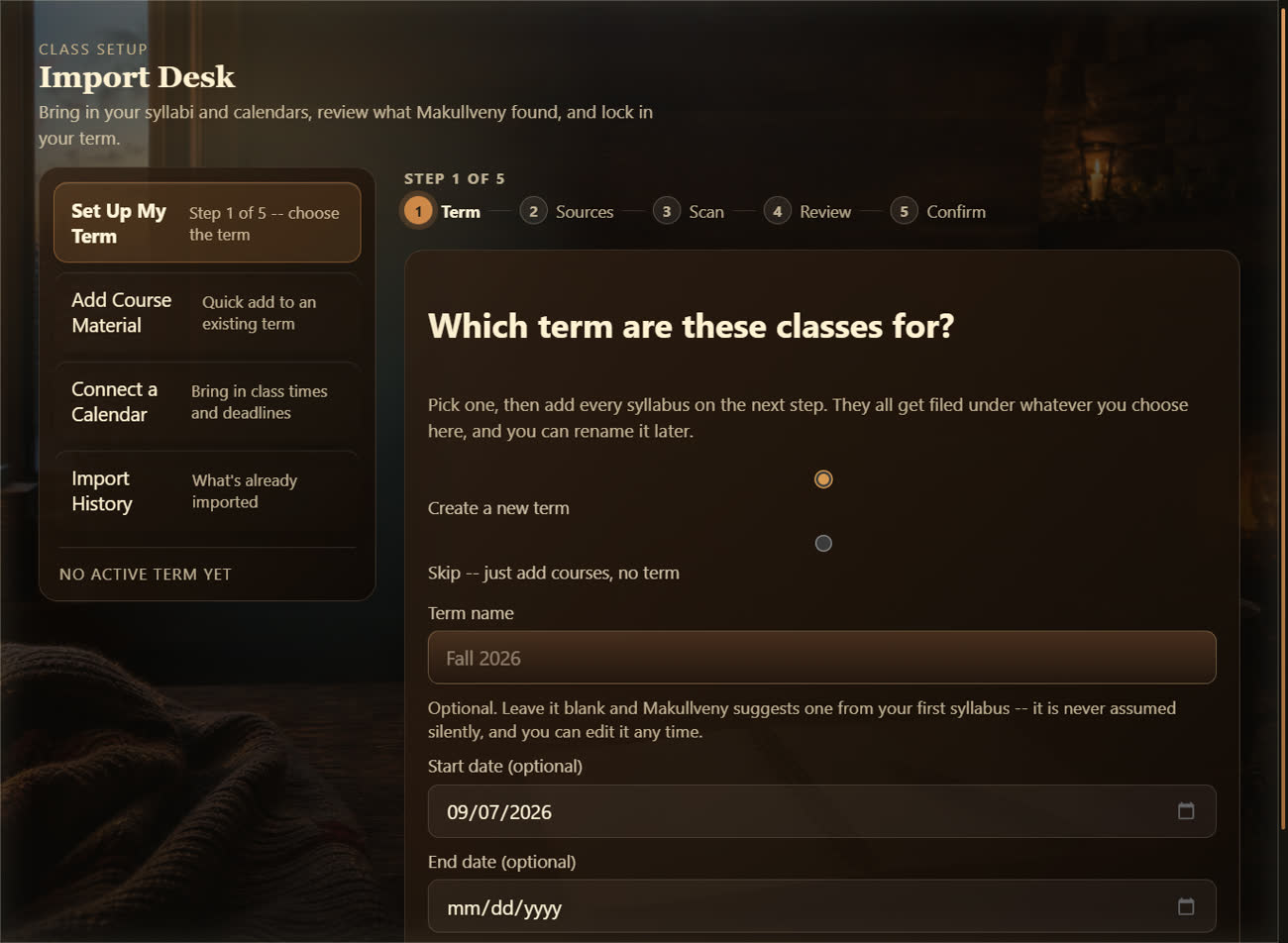
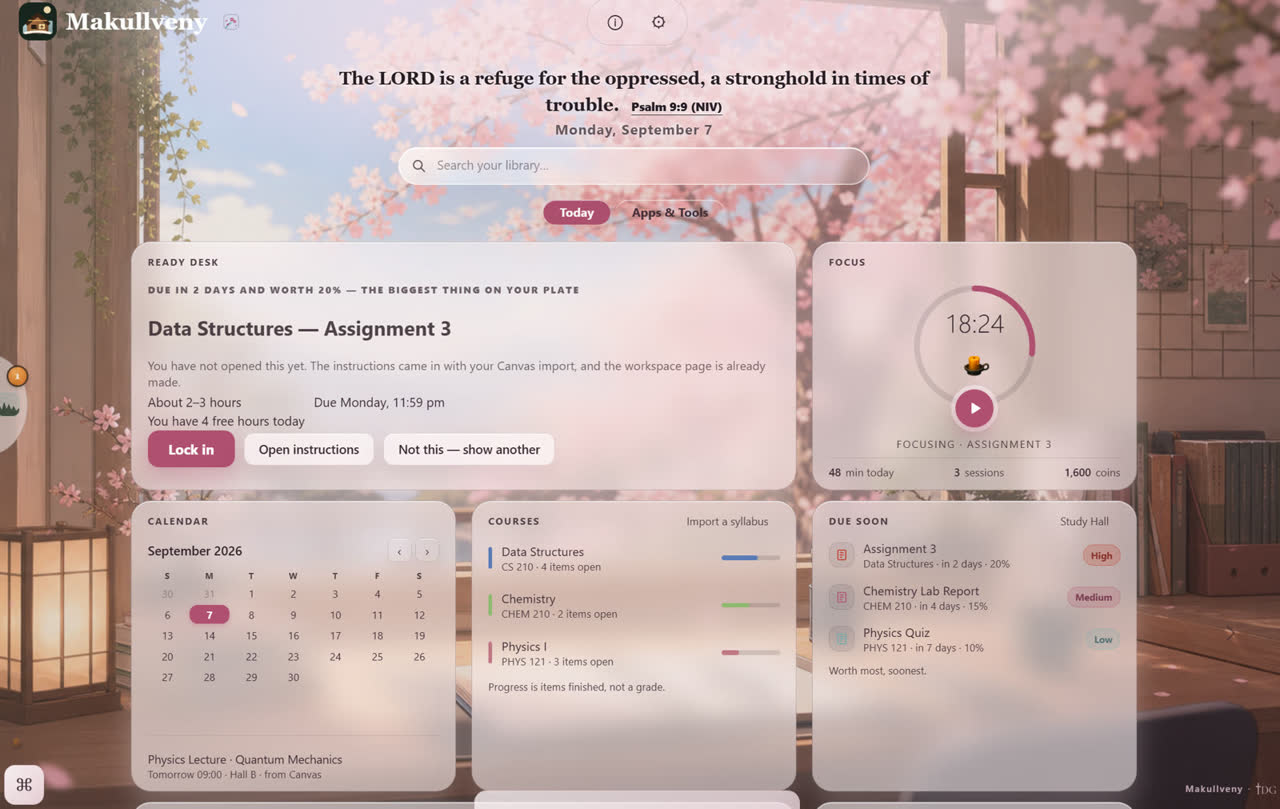
Drop a syllabus in, tick what to keep, and get a class book, a starter flashcard deck and your dates in one pass.
 Makullveny
Your notes, your flashcards, your syllabus, a file converter, a focus timer and a lofi radio — all on one desktop, on your own machine. Free, and you never have to make an account: signing in is there when you want cloud backup, and off until then.
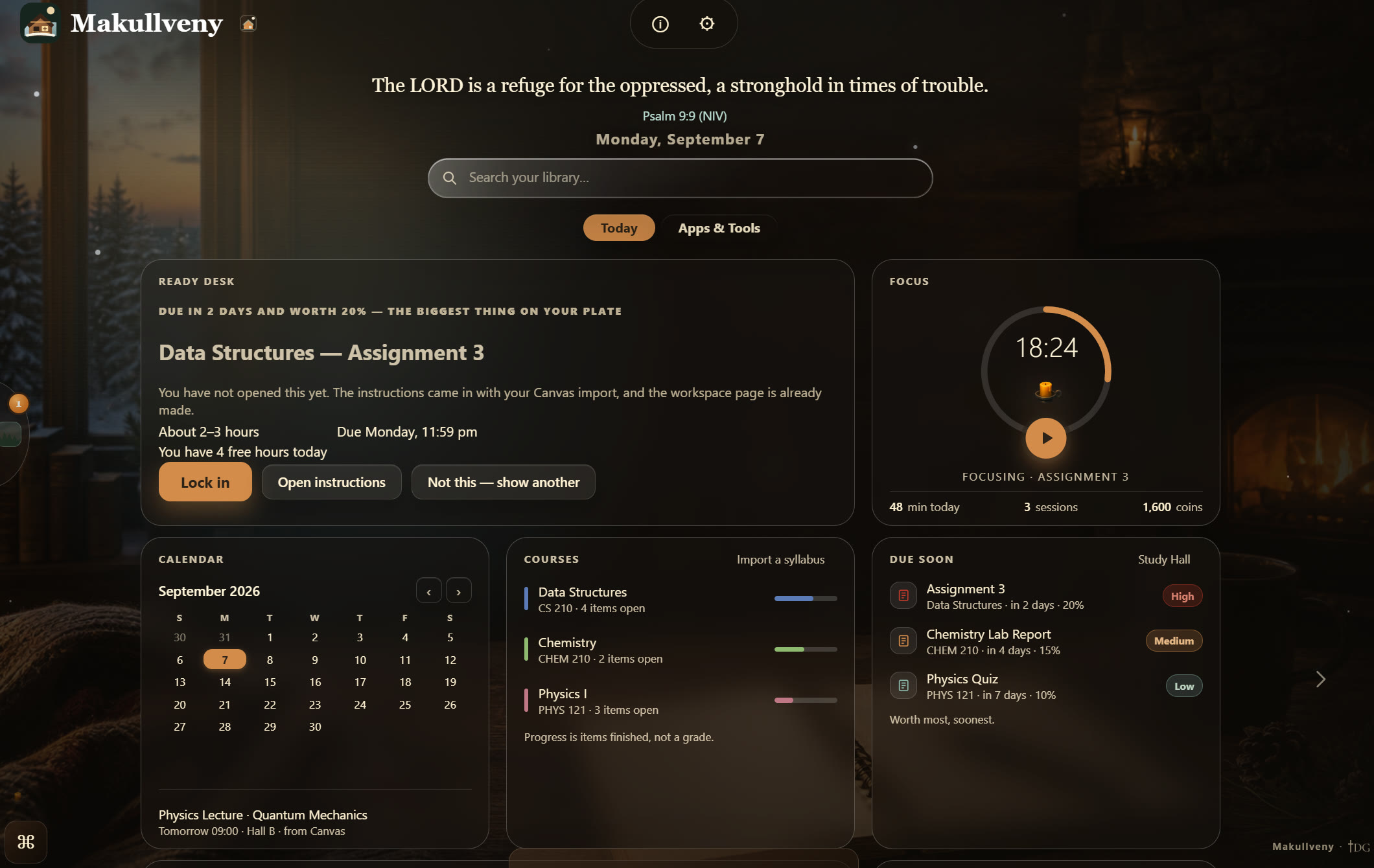
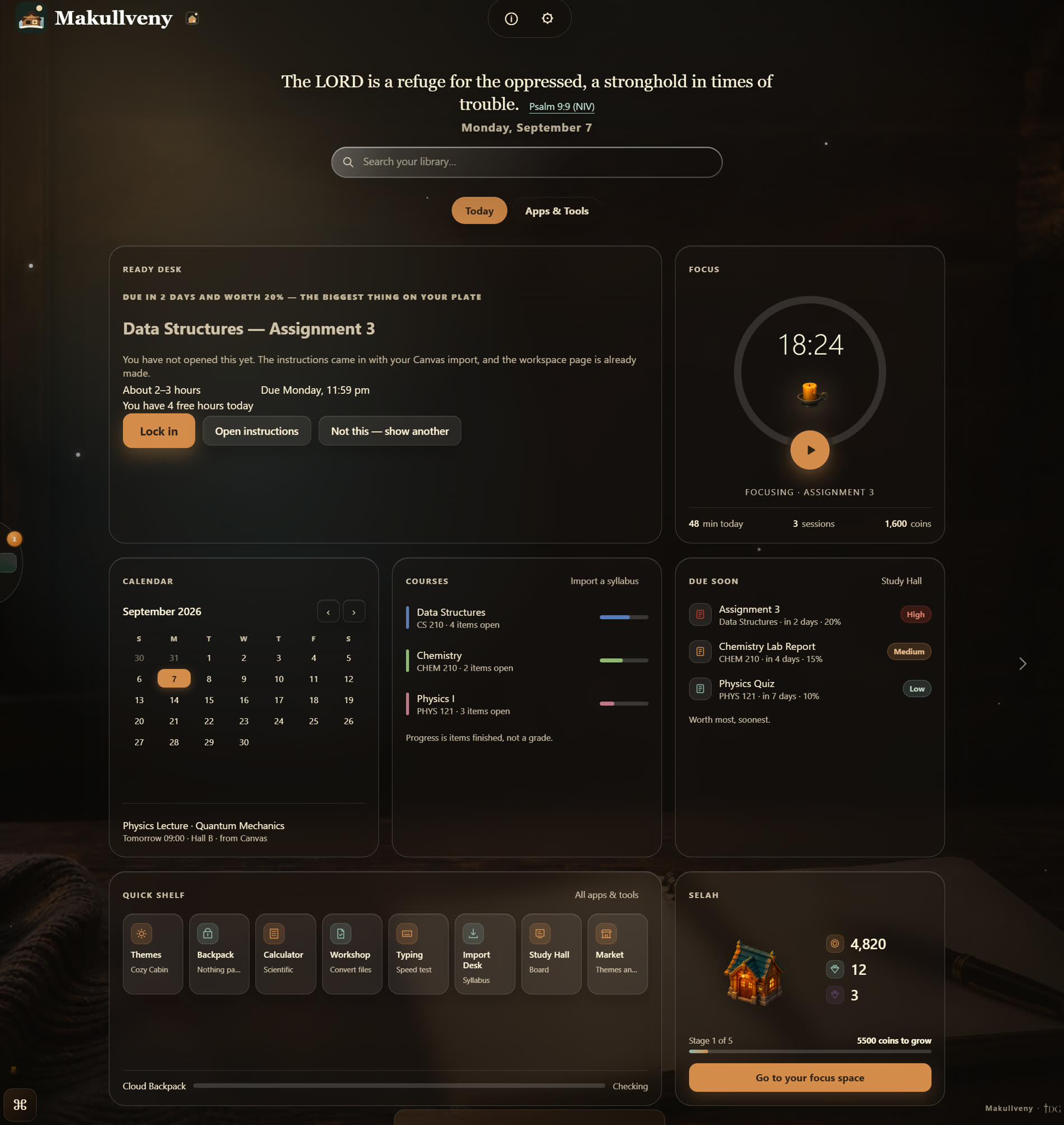
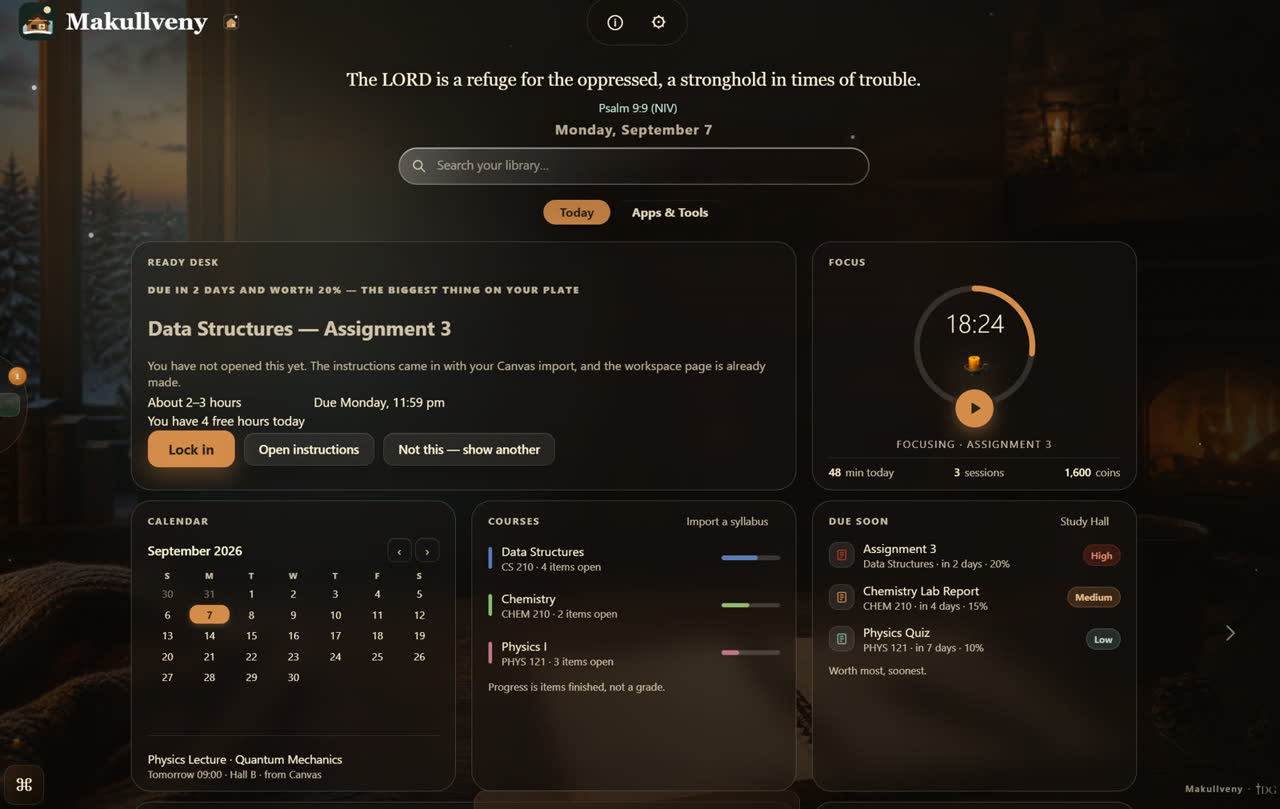
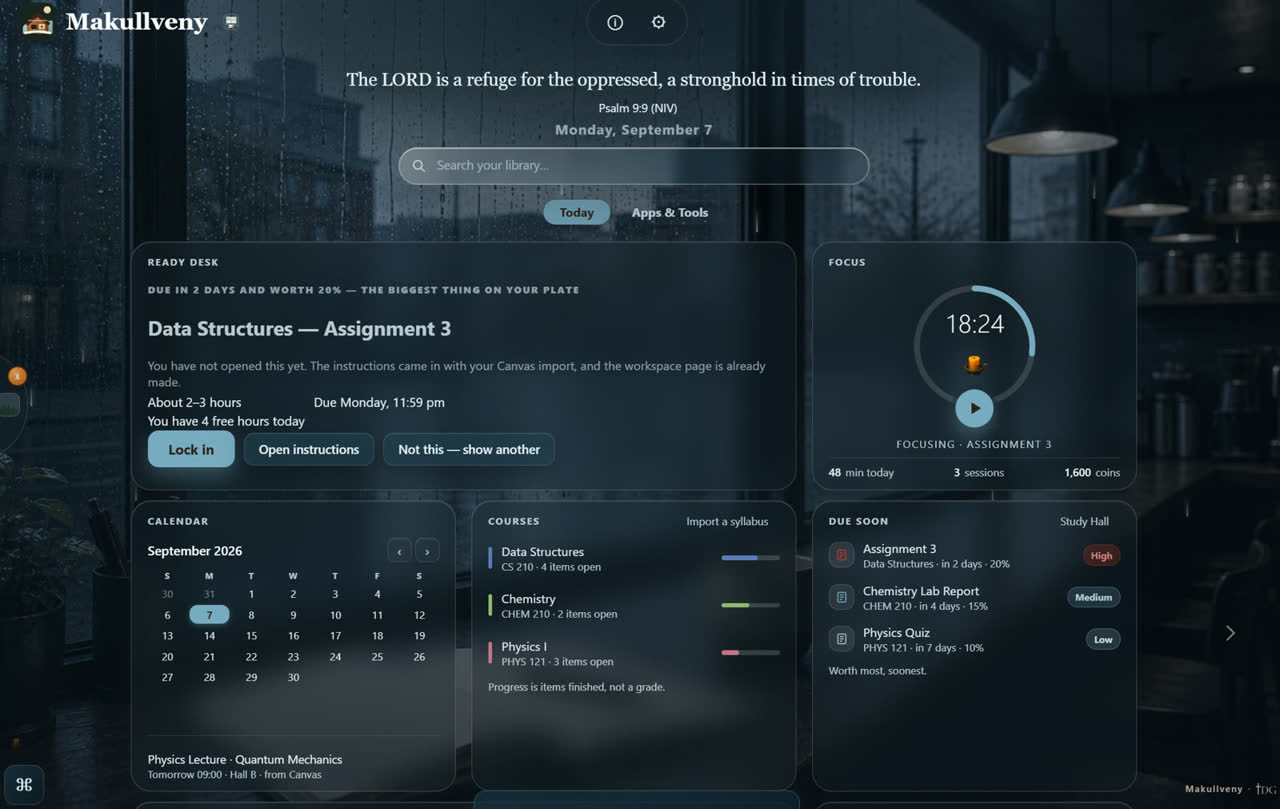
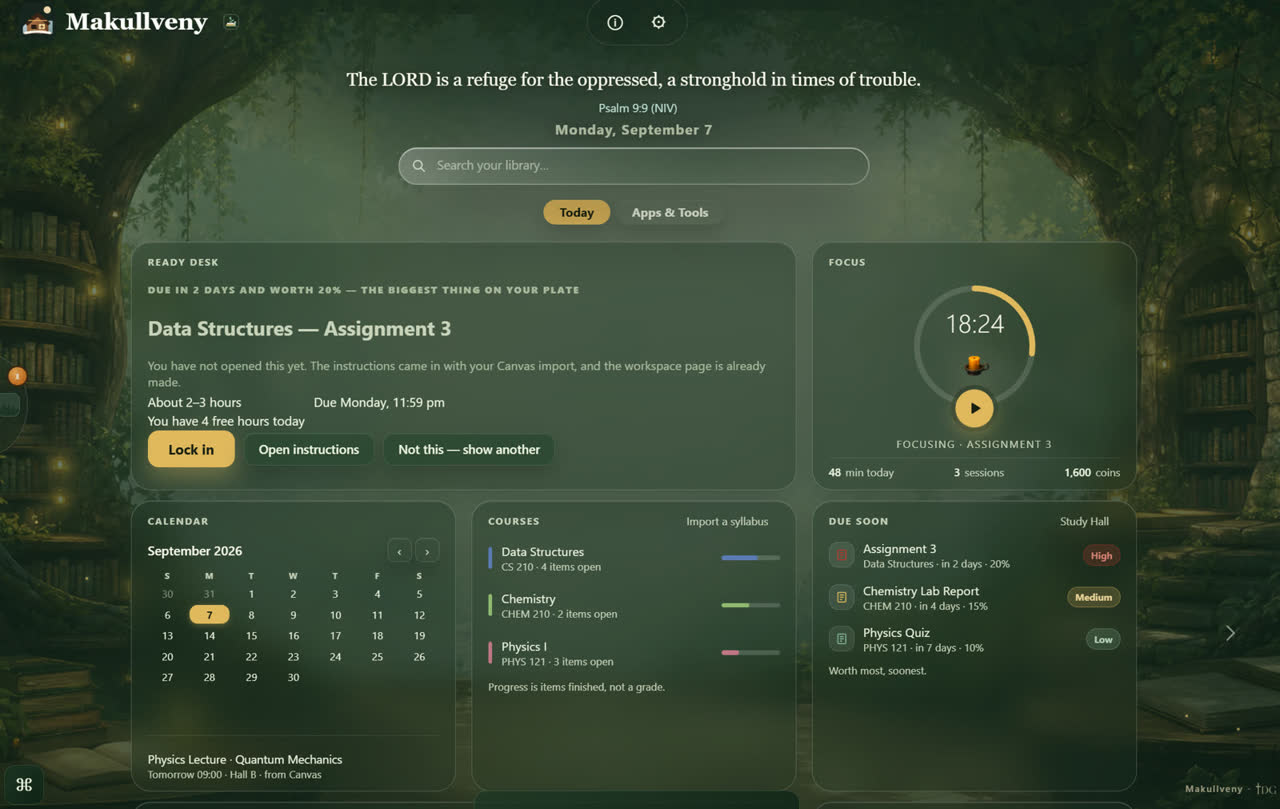
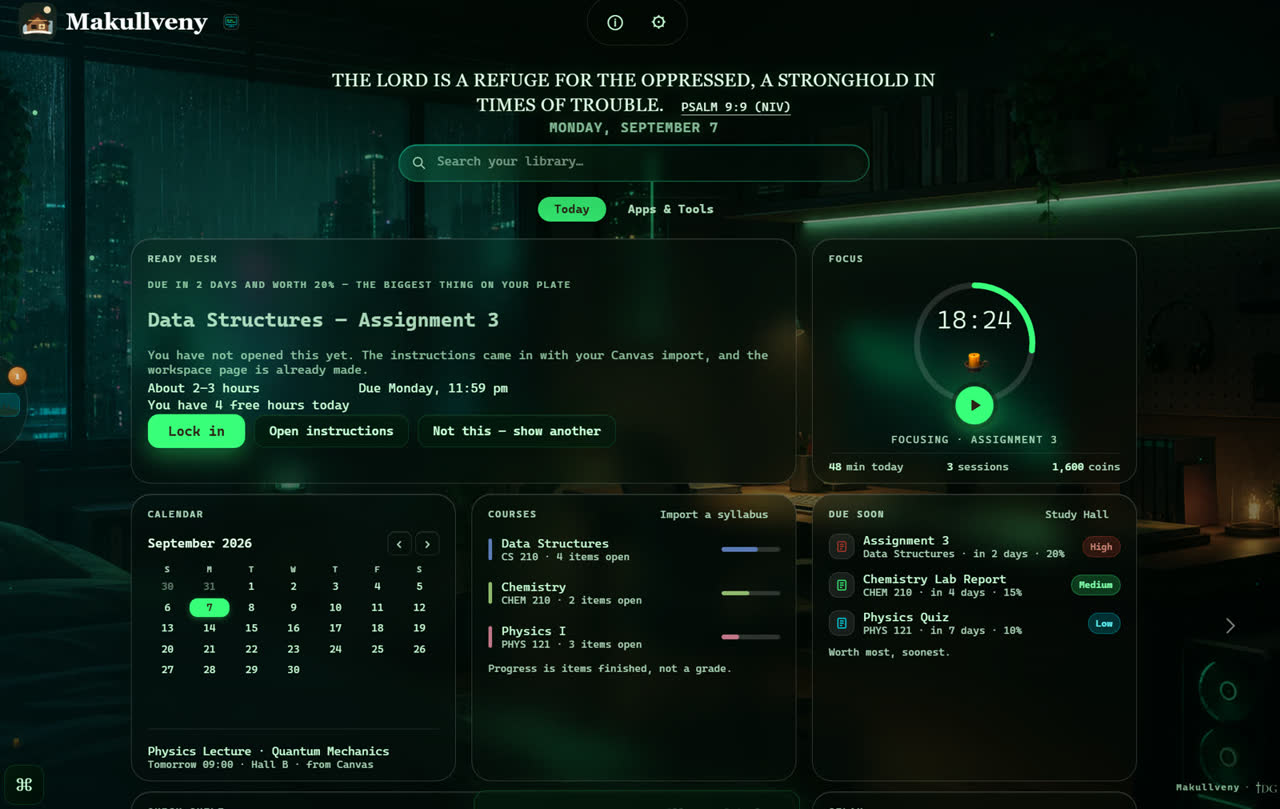
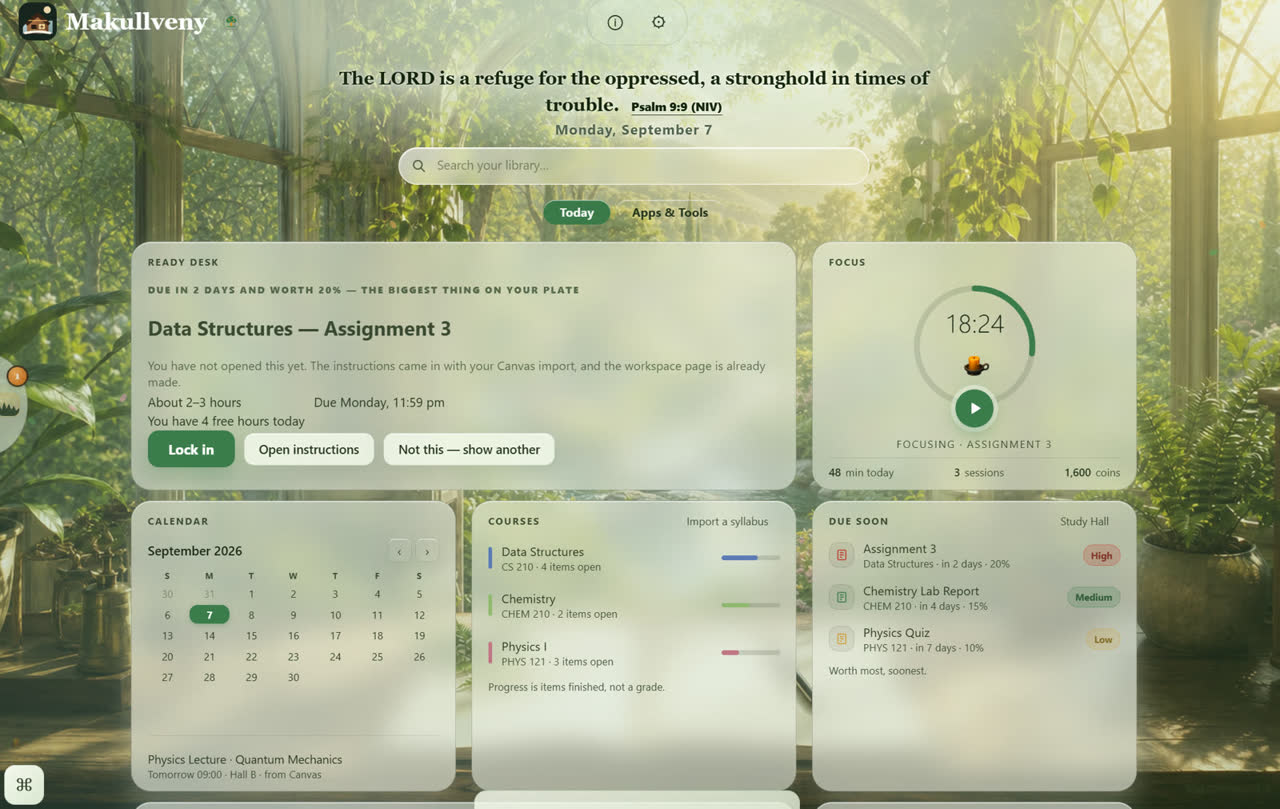
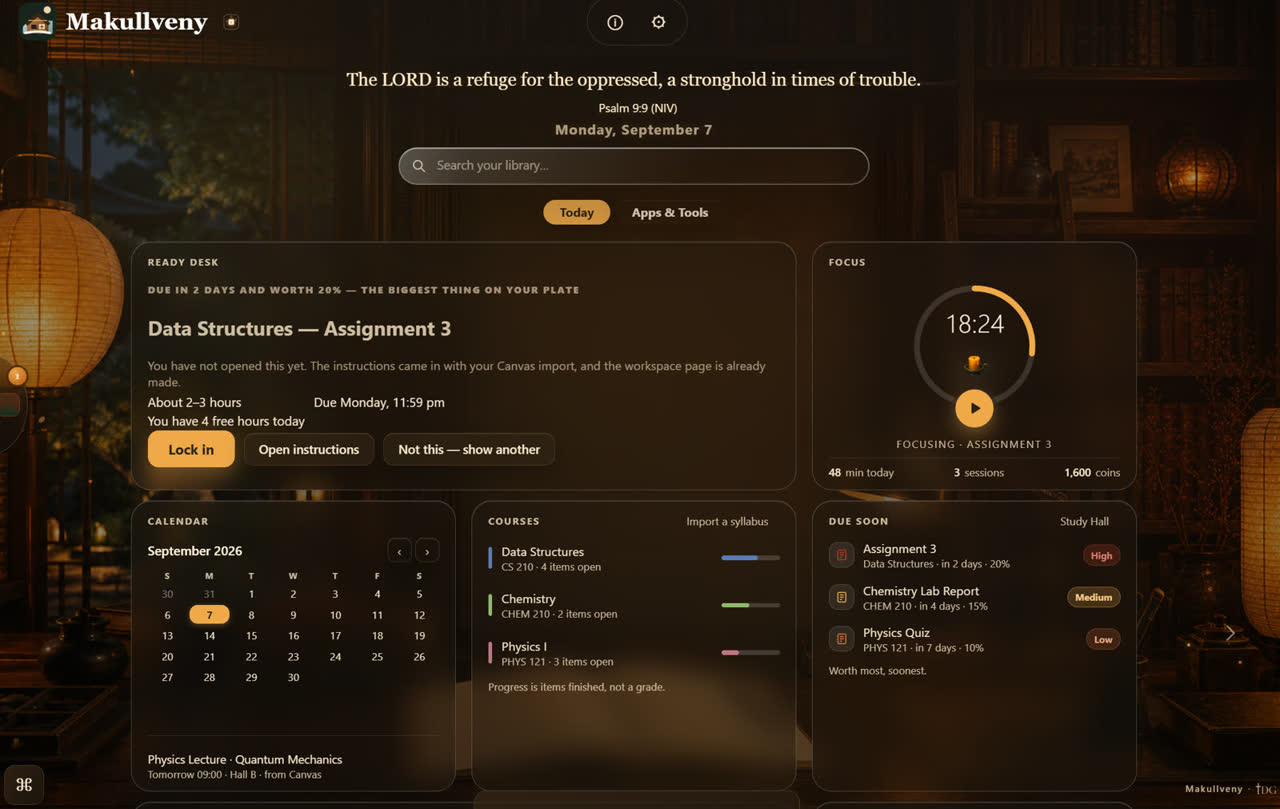
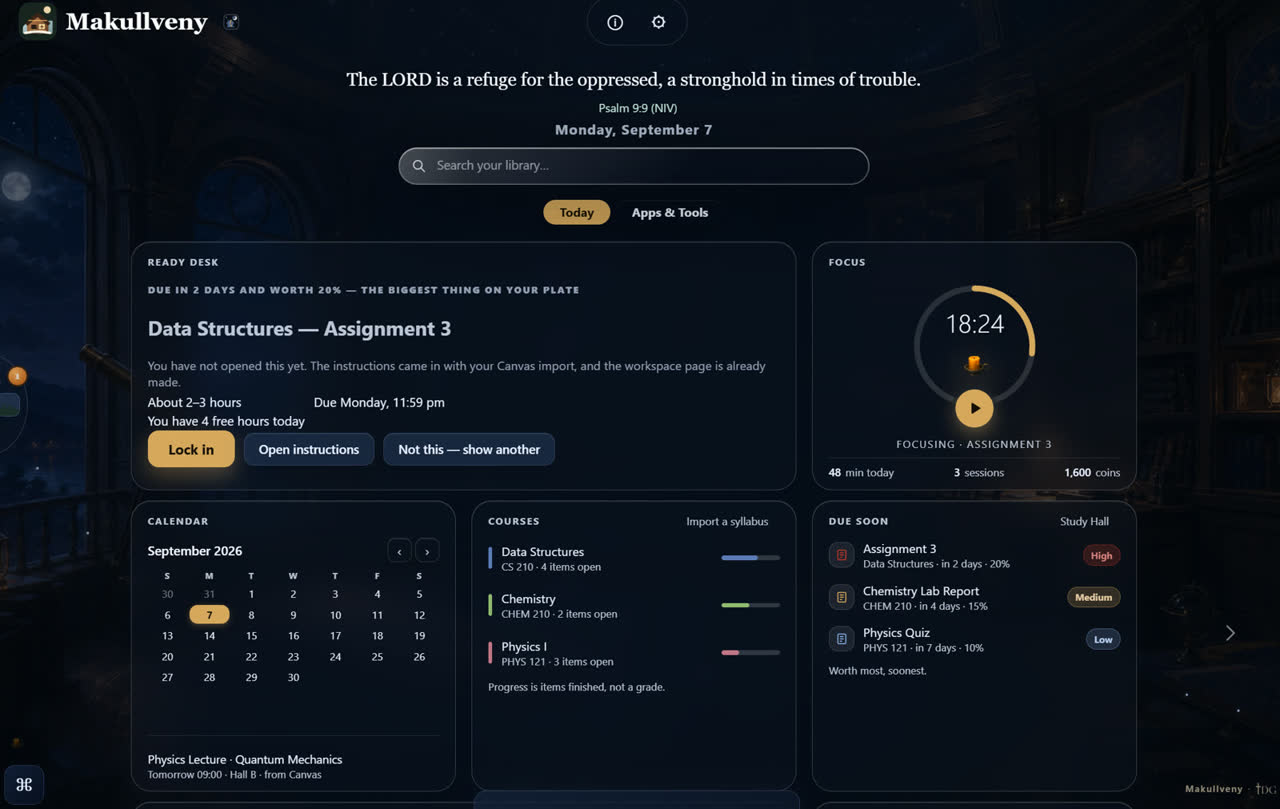
TodayEverything due, in the order it matters — the one assignment worth starting, a candle timer for the sitting you are in, and your month beside it.
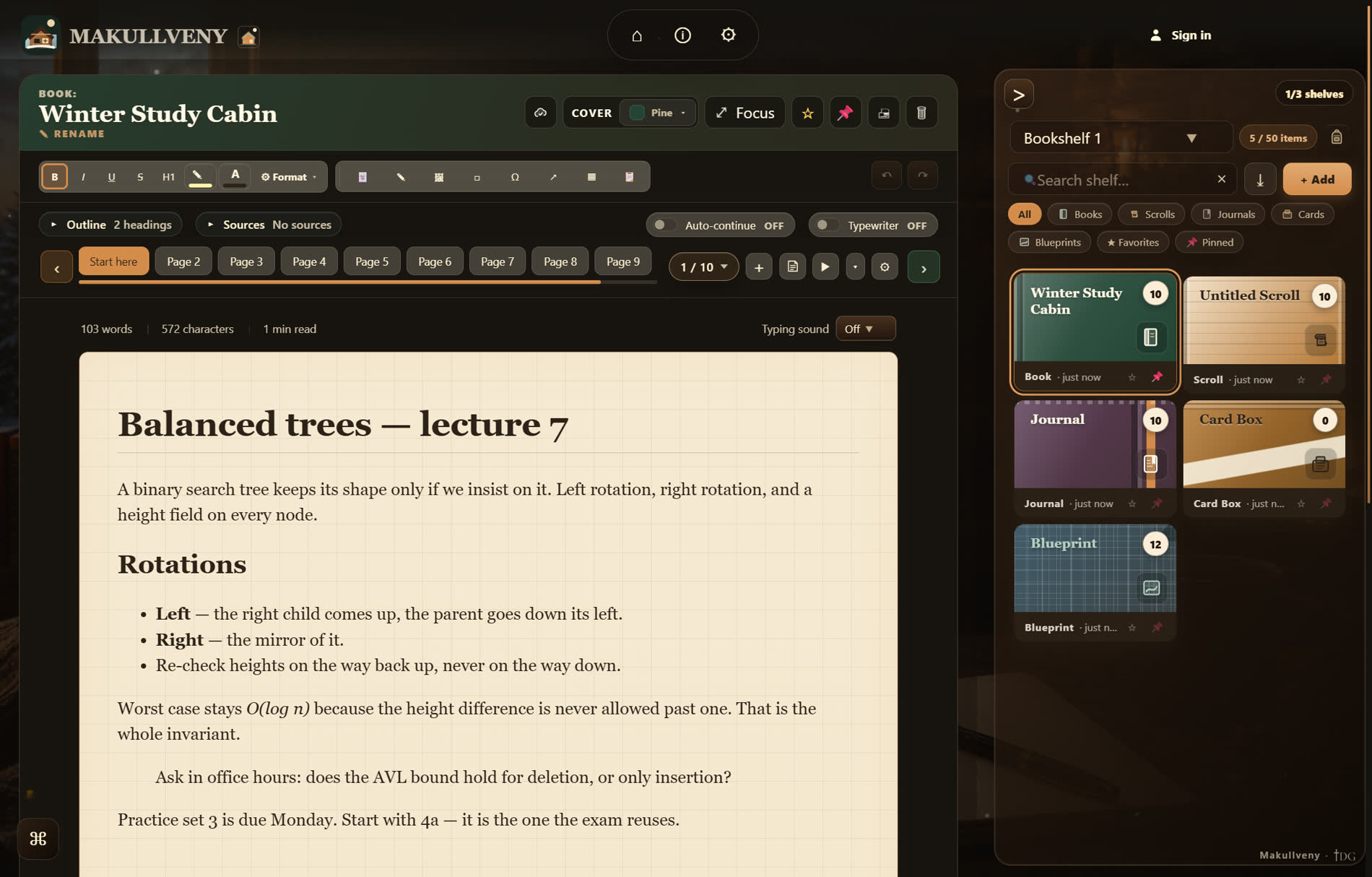
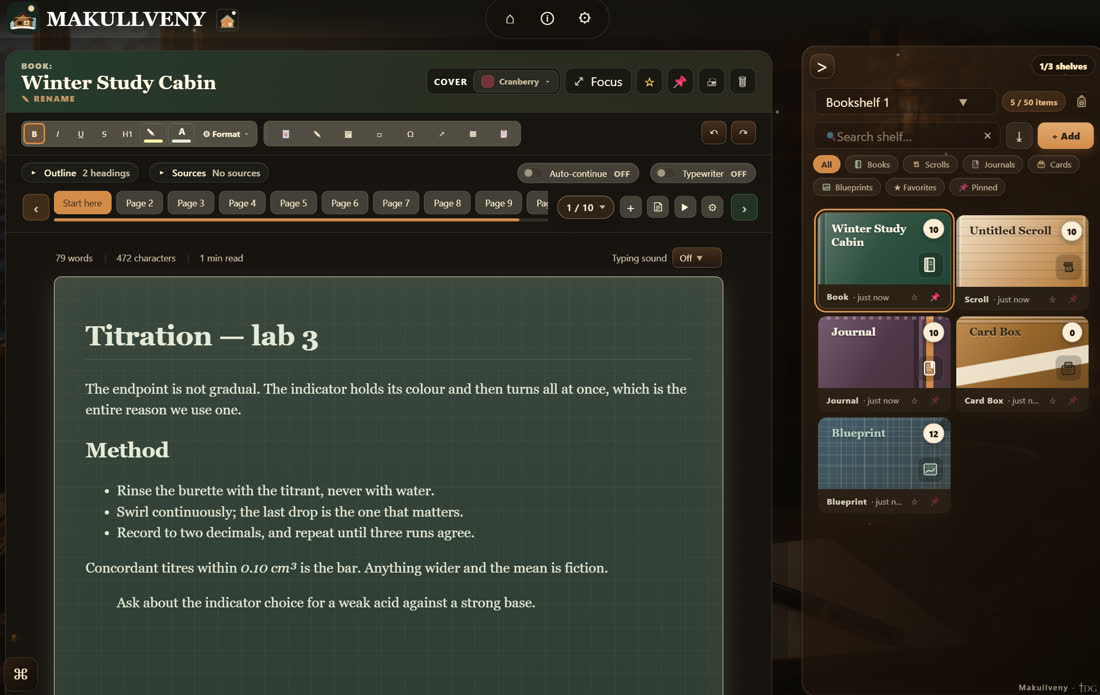
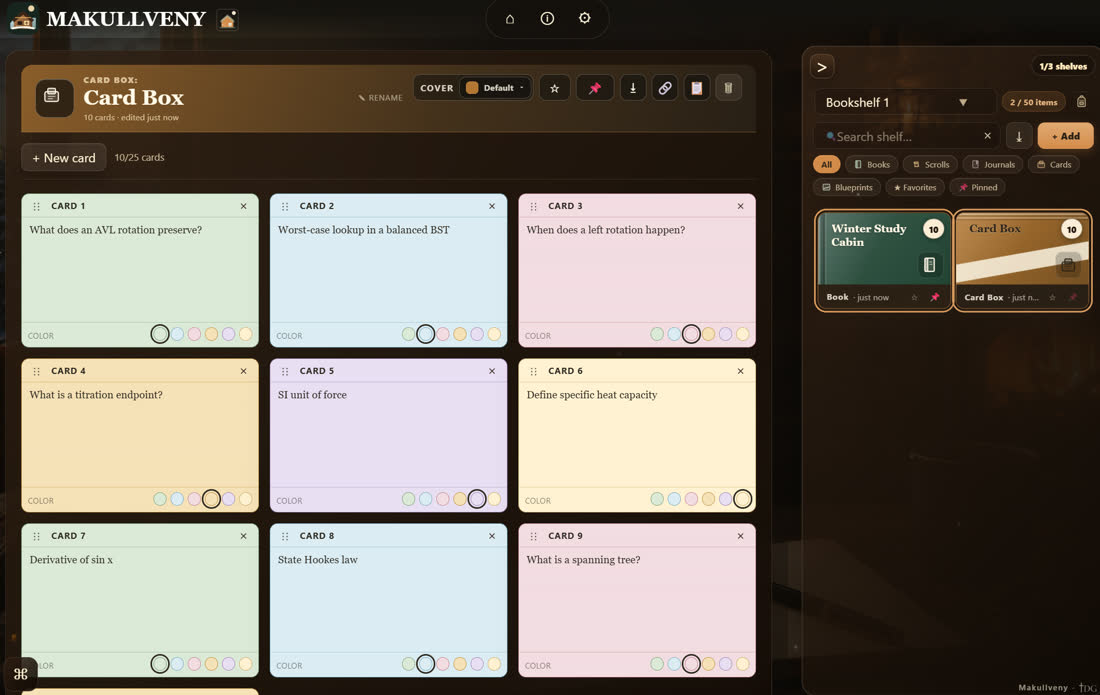
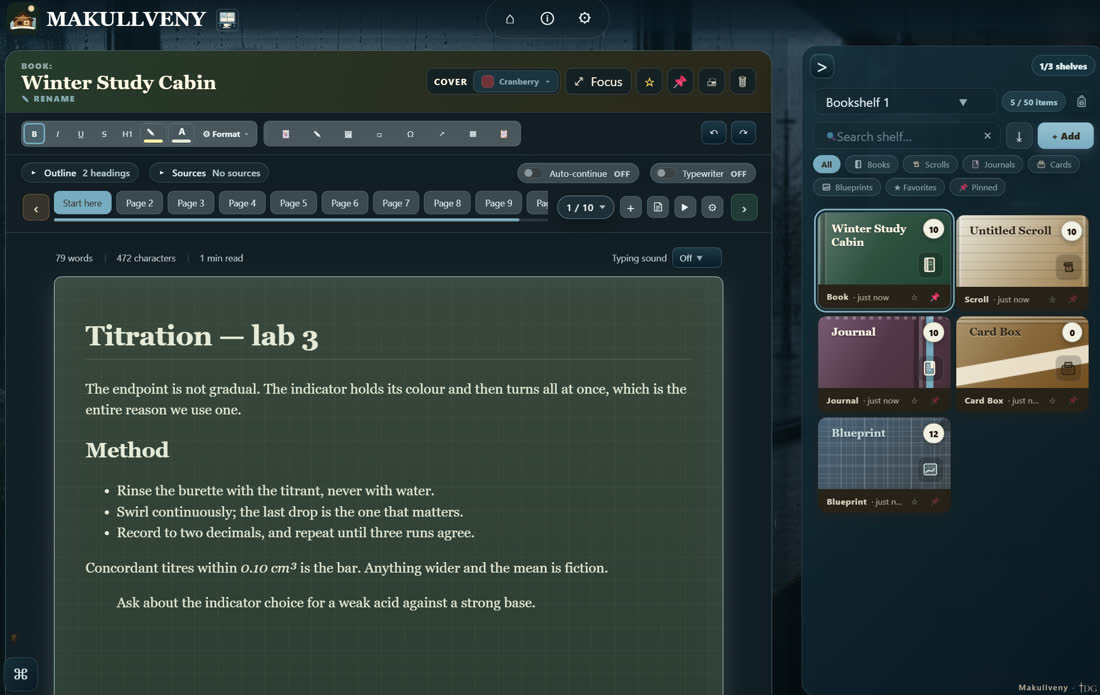
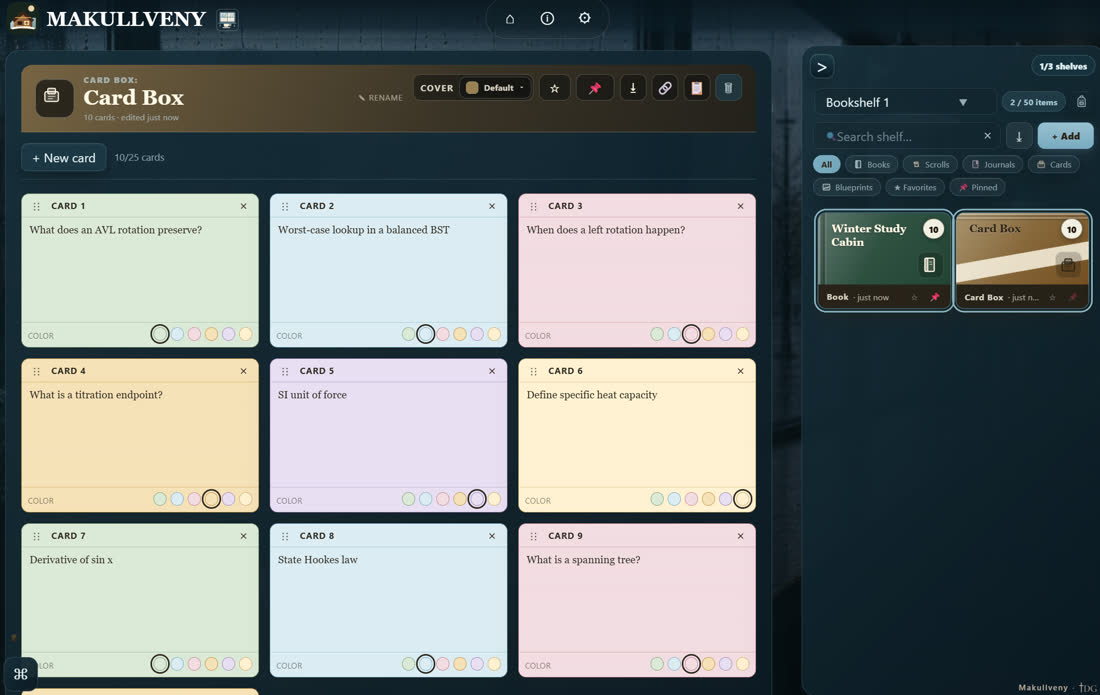
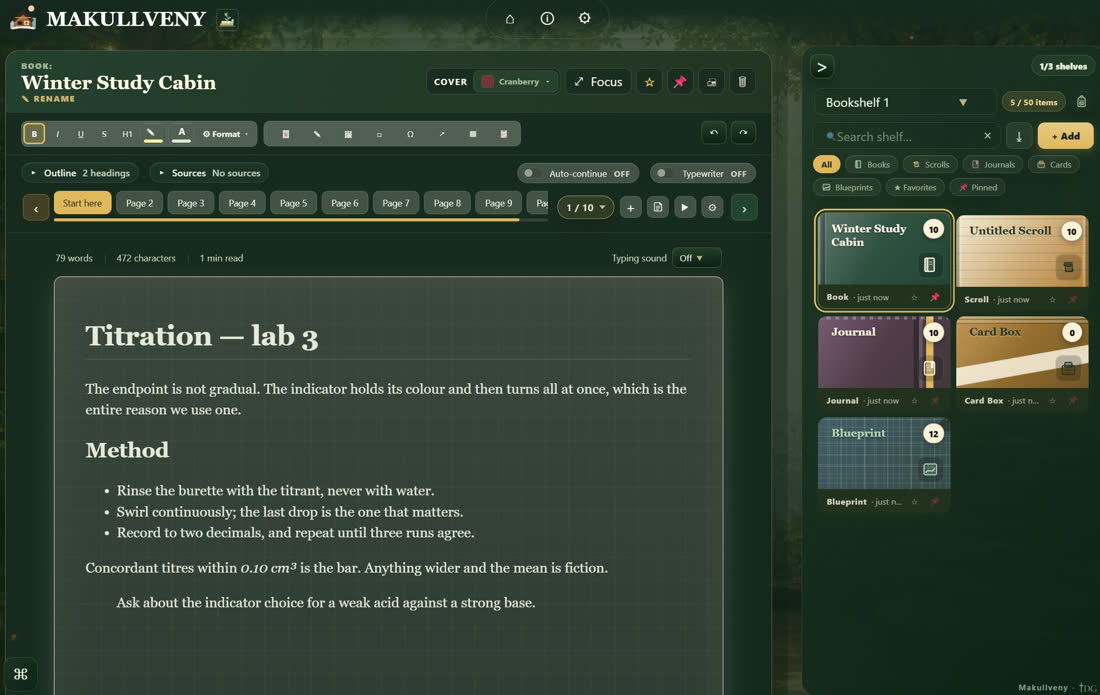
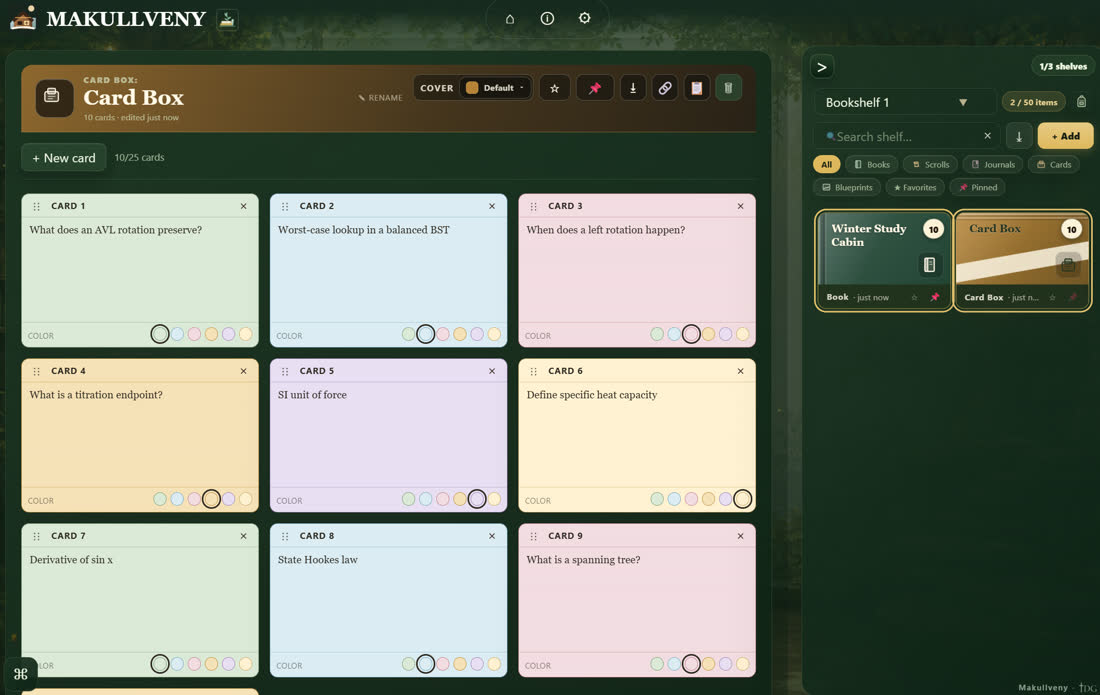
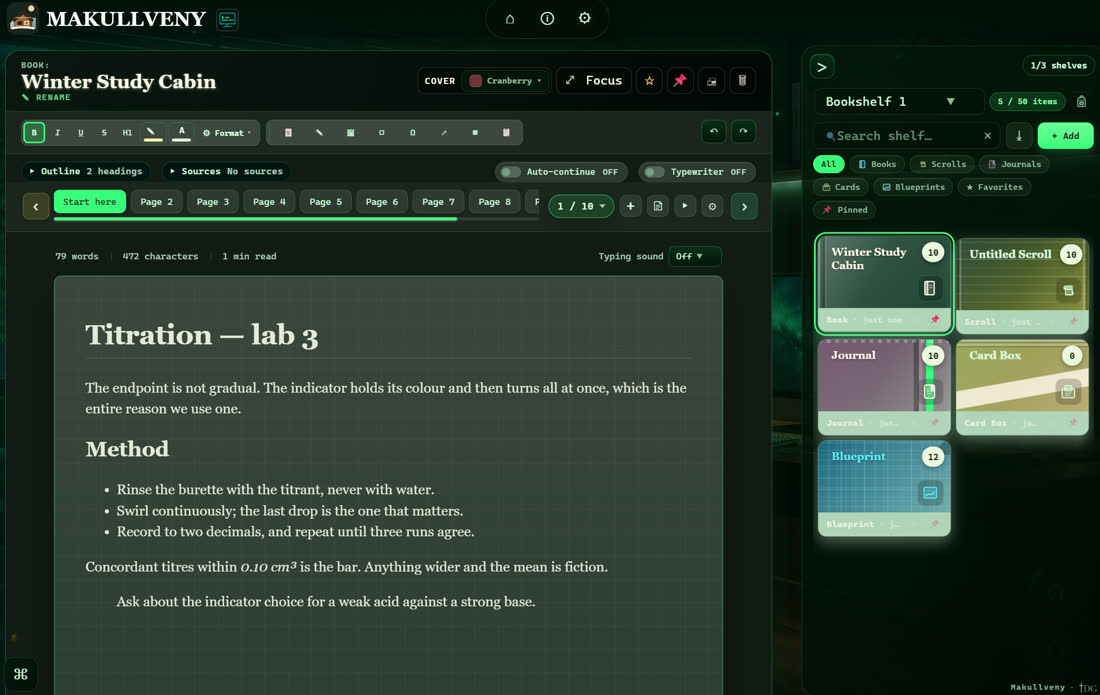
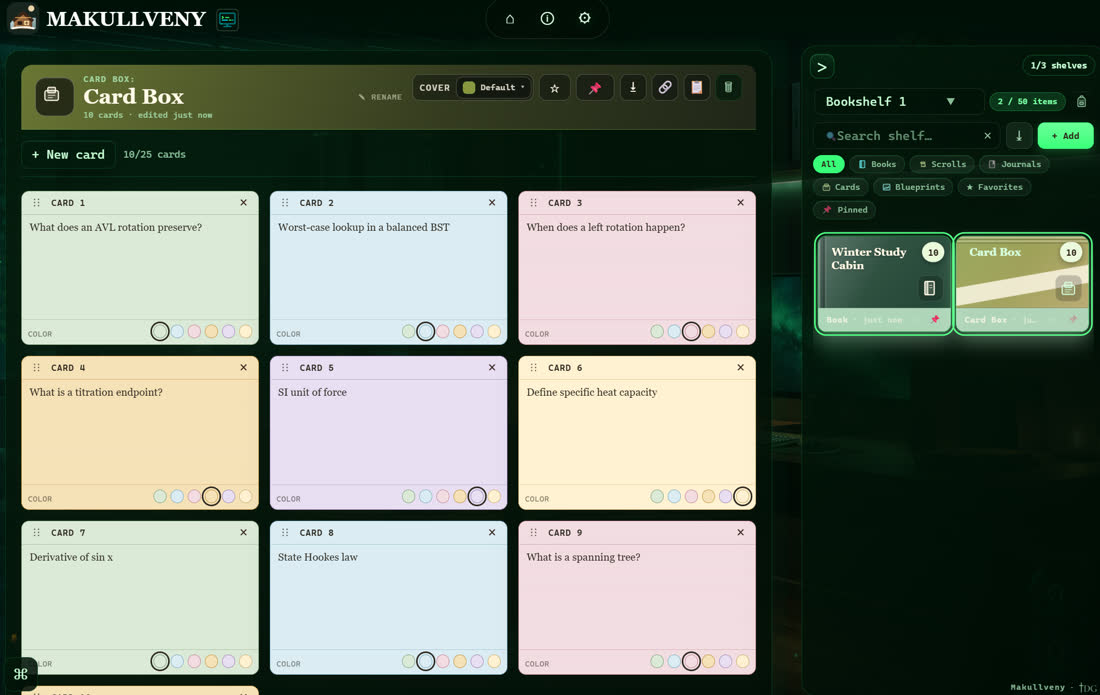
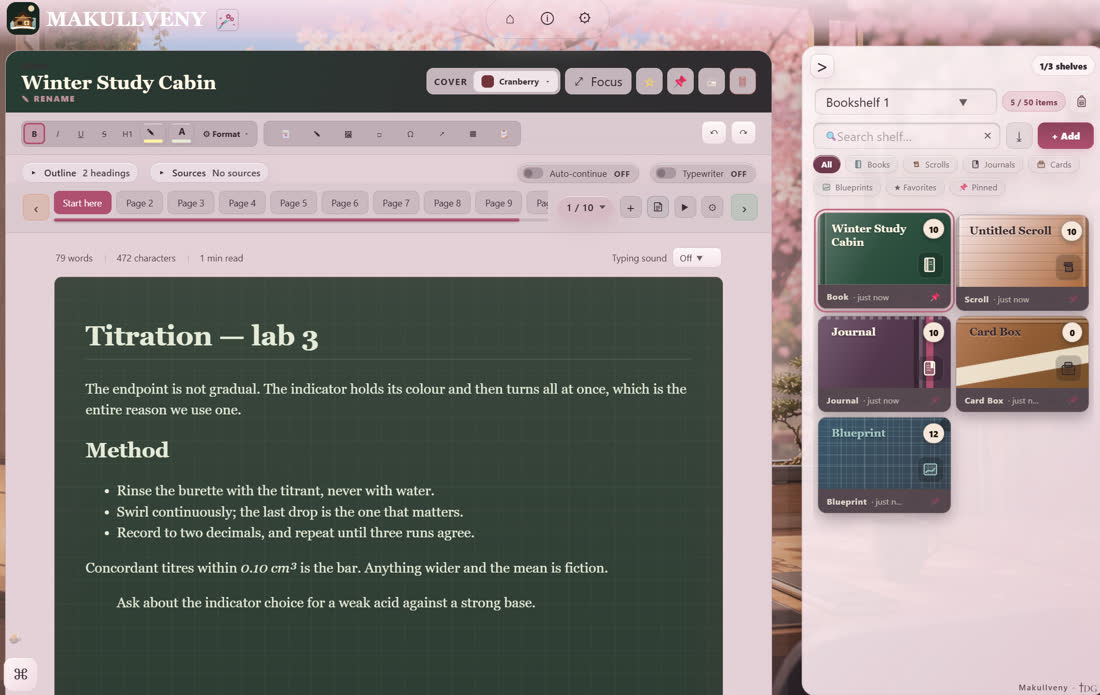
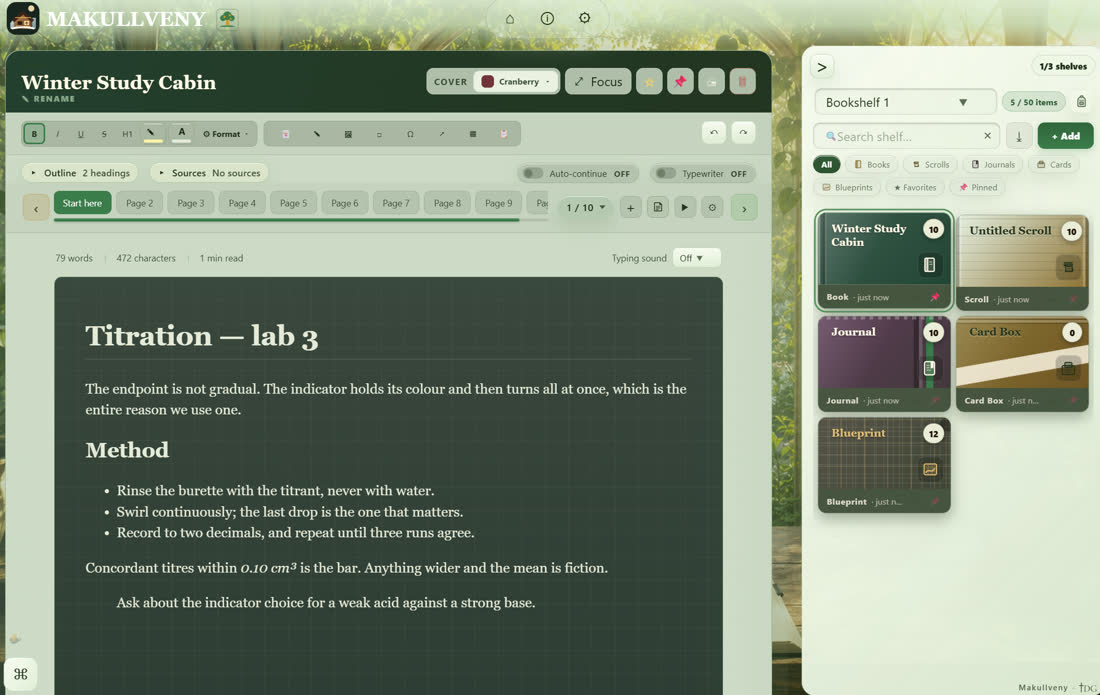
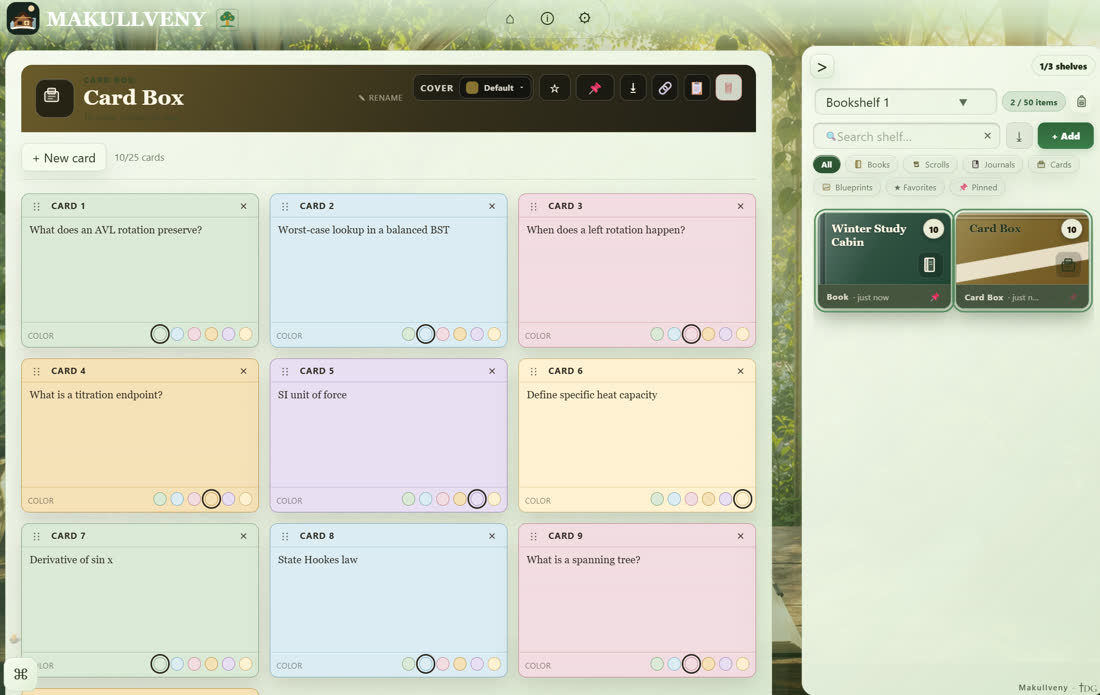
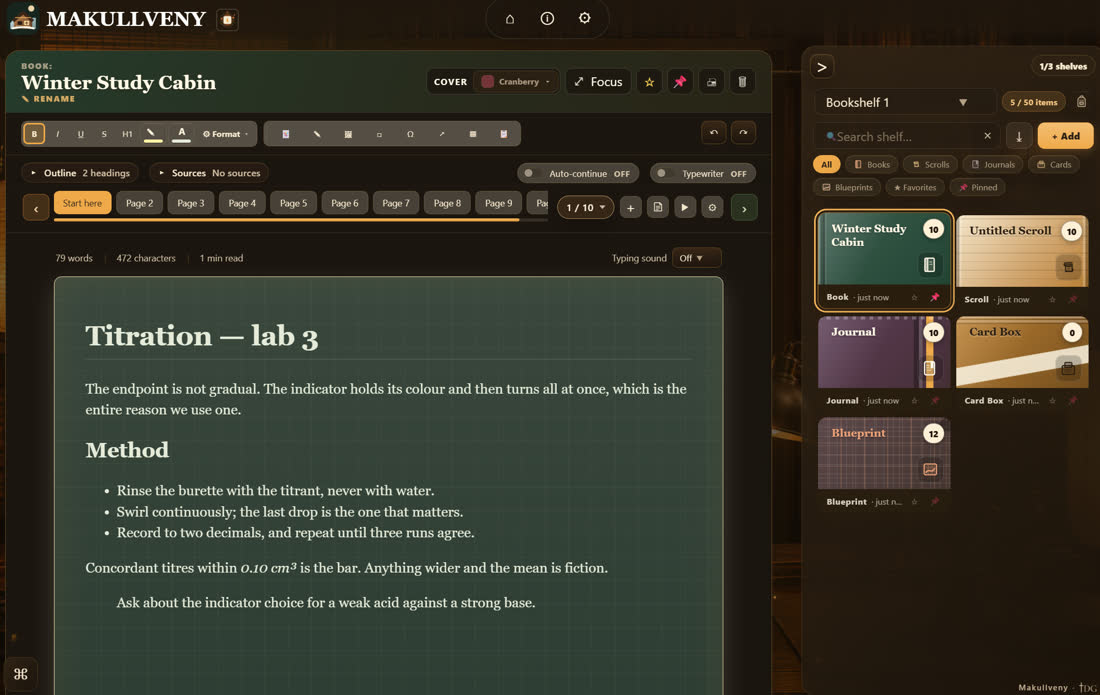
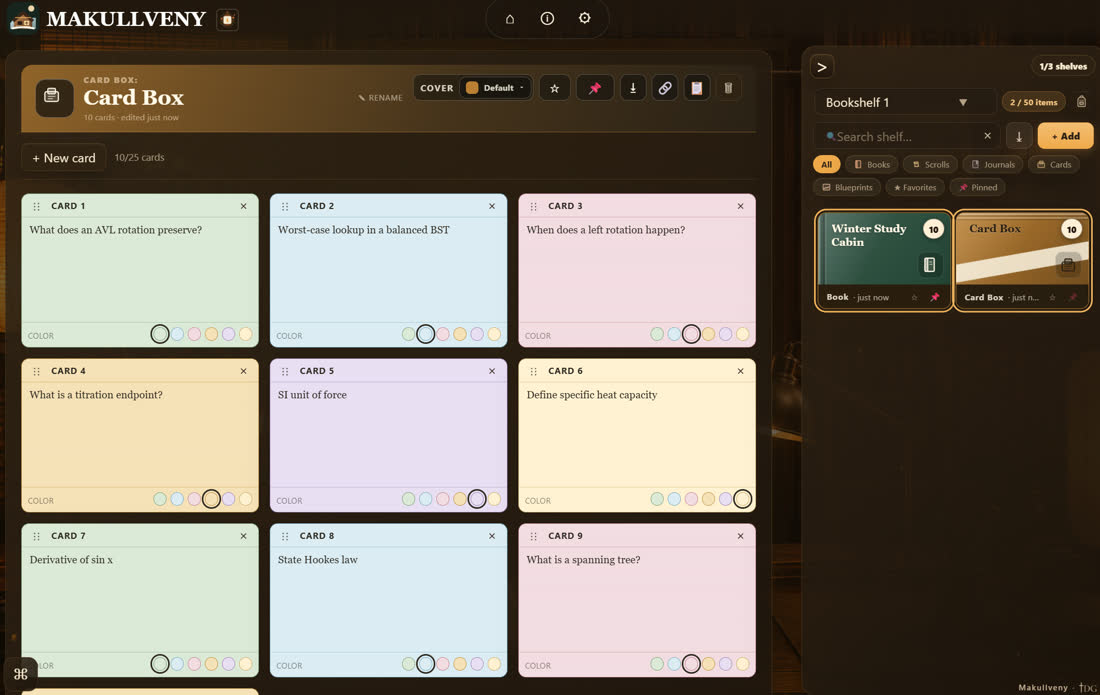
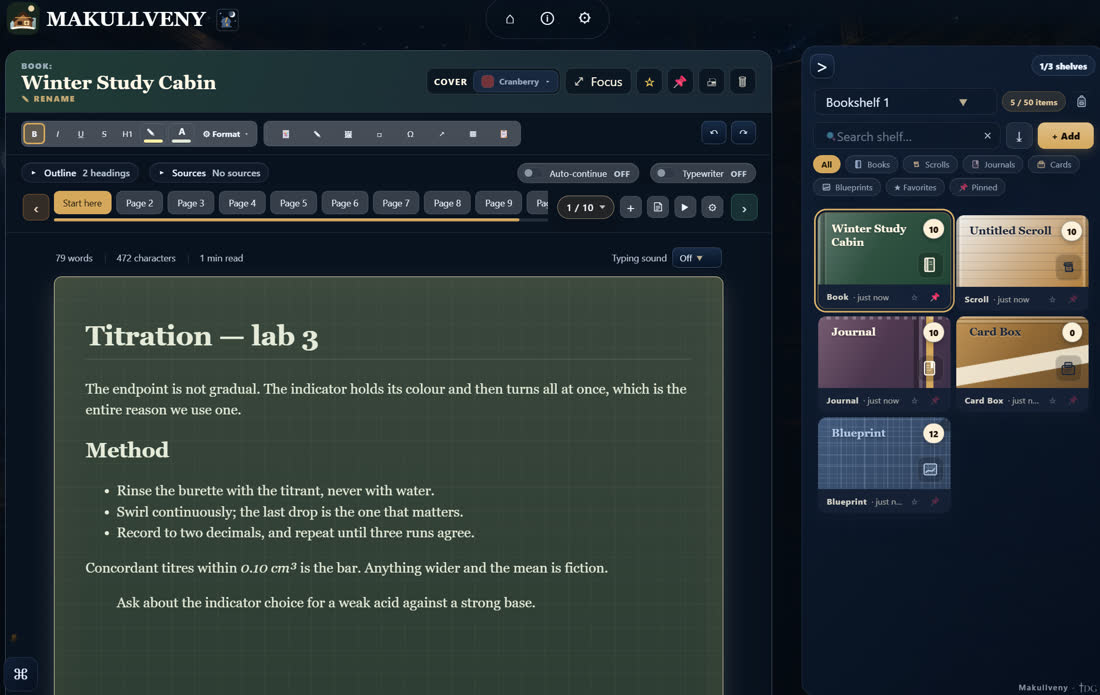
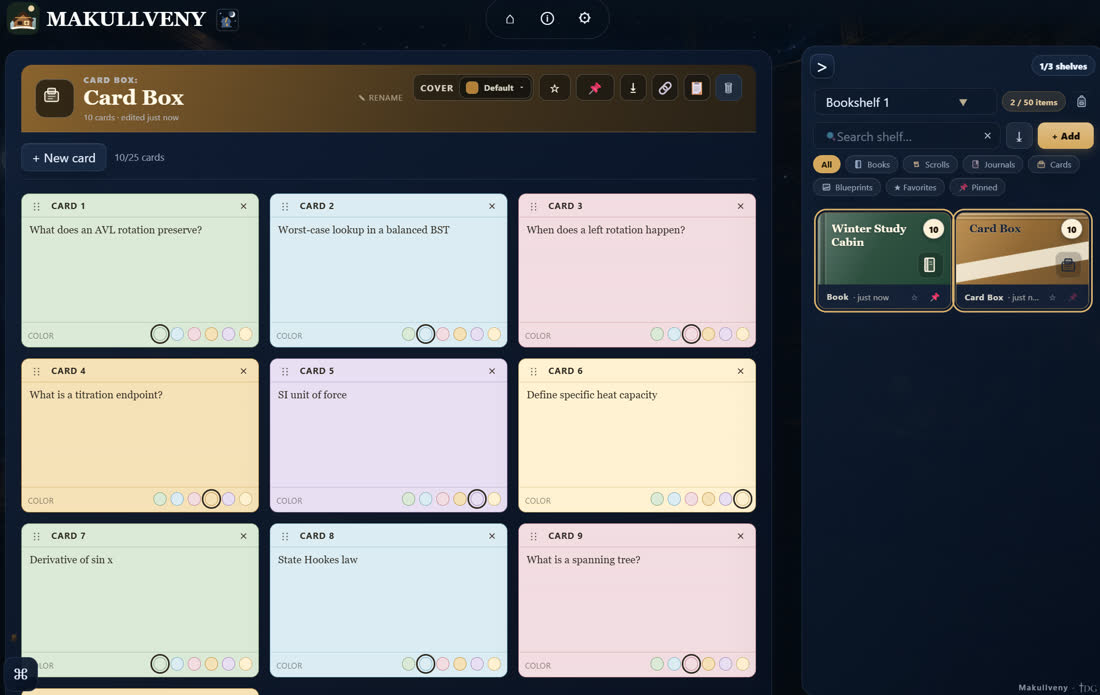
Library DeskYour notes on real paper you choose, in books, scrolls, journals, card boxes and blueprints. It prints, it exports, and it never leaves this machine.
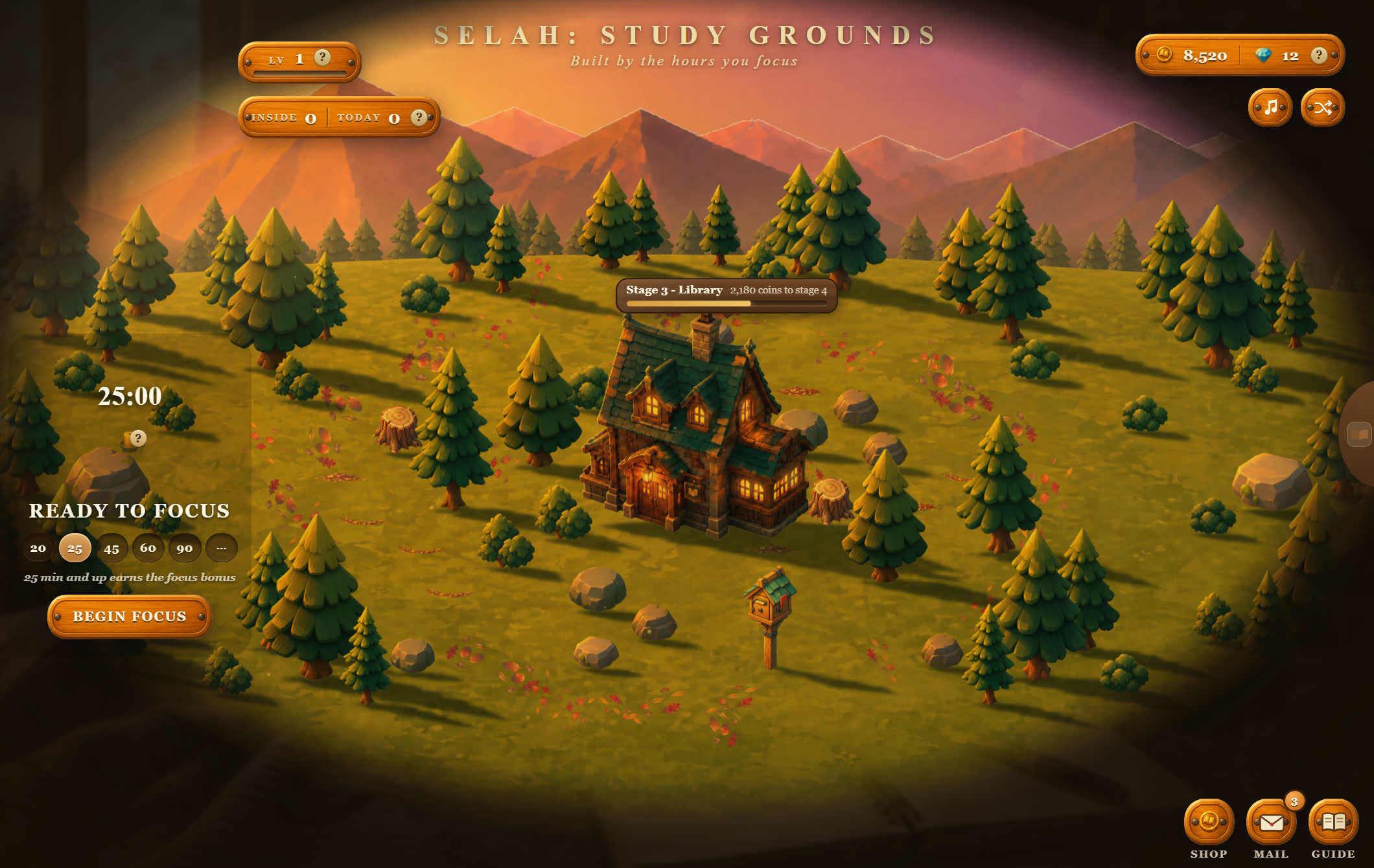
Selah: Study GroundsThe hours you actually sat down, built into a place. Study, and the clearing grows a library — nothing to break, nothing to lose.
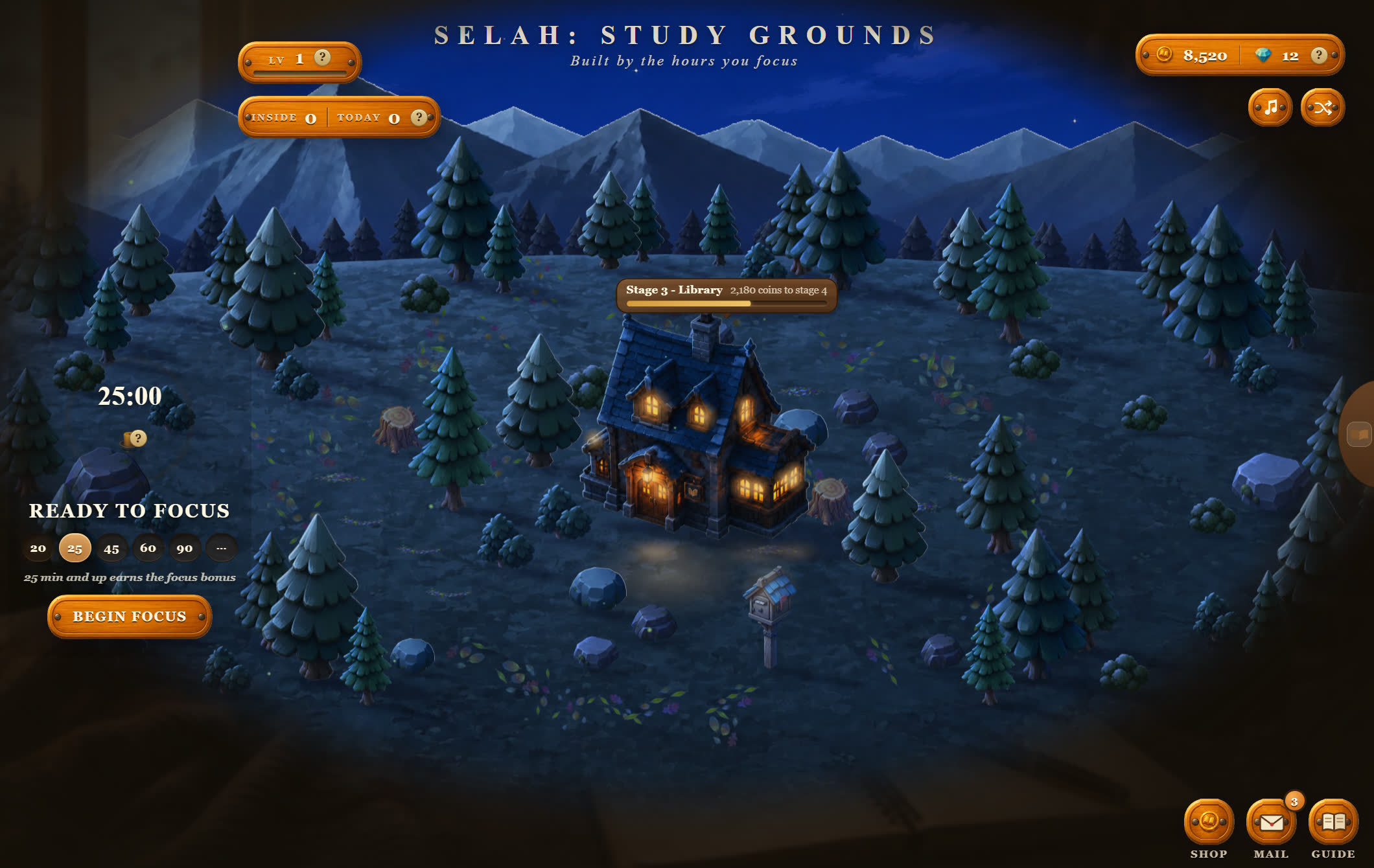
Selah at nightThe same grounds, lit by the hour you are studying in. Golden morning, midday, dusk, night — it turns with your day.
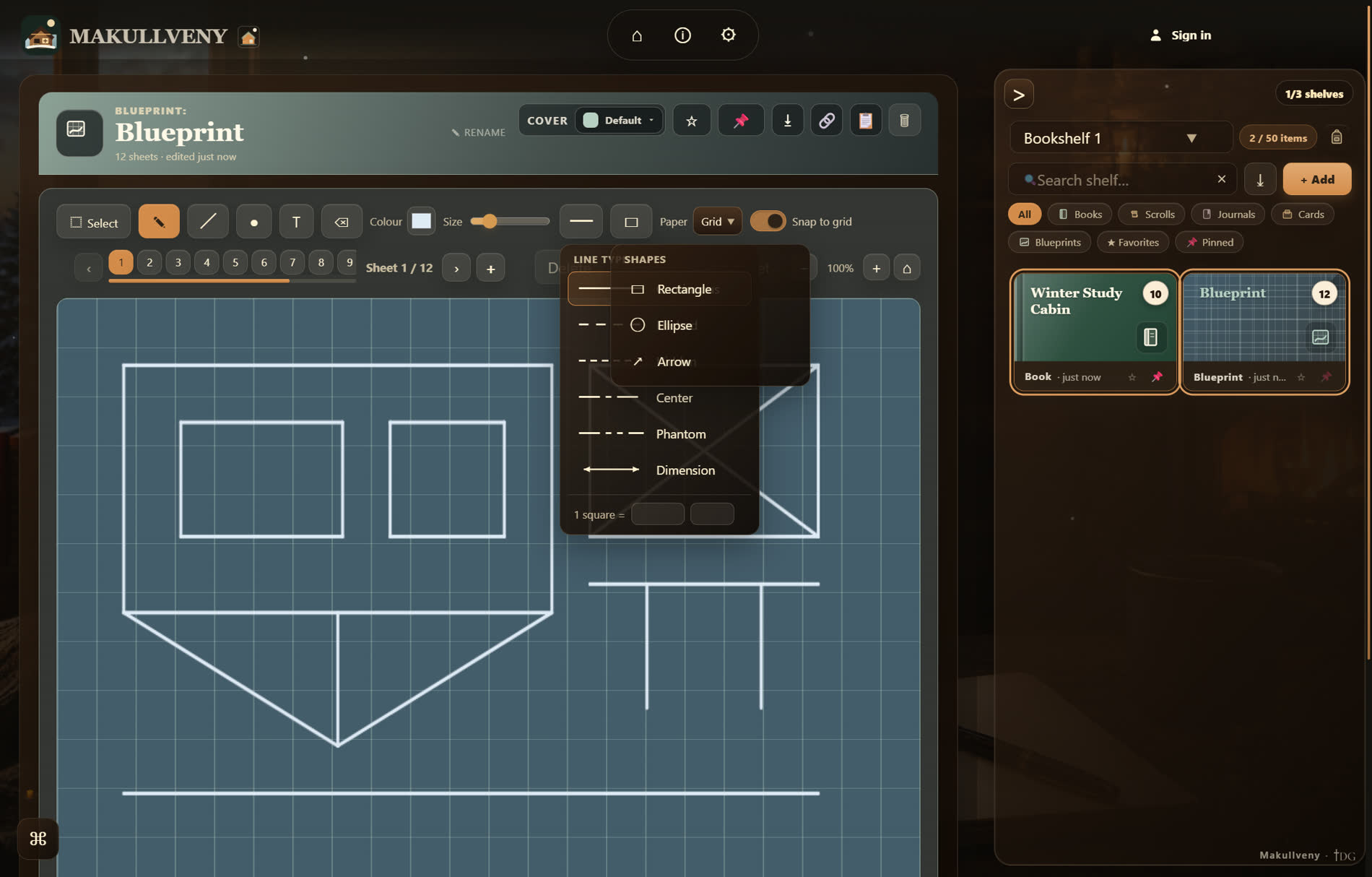
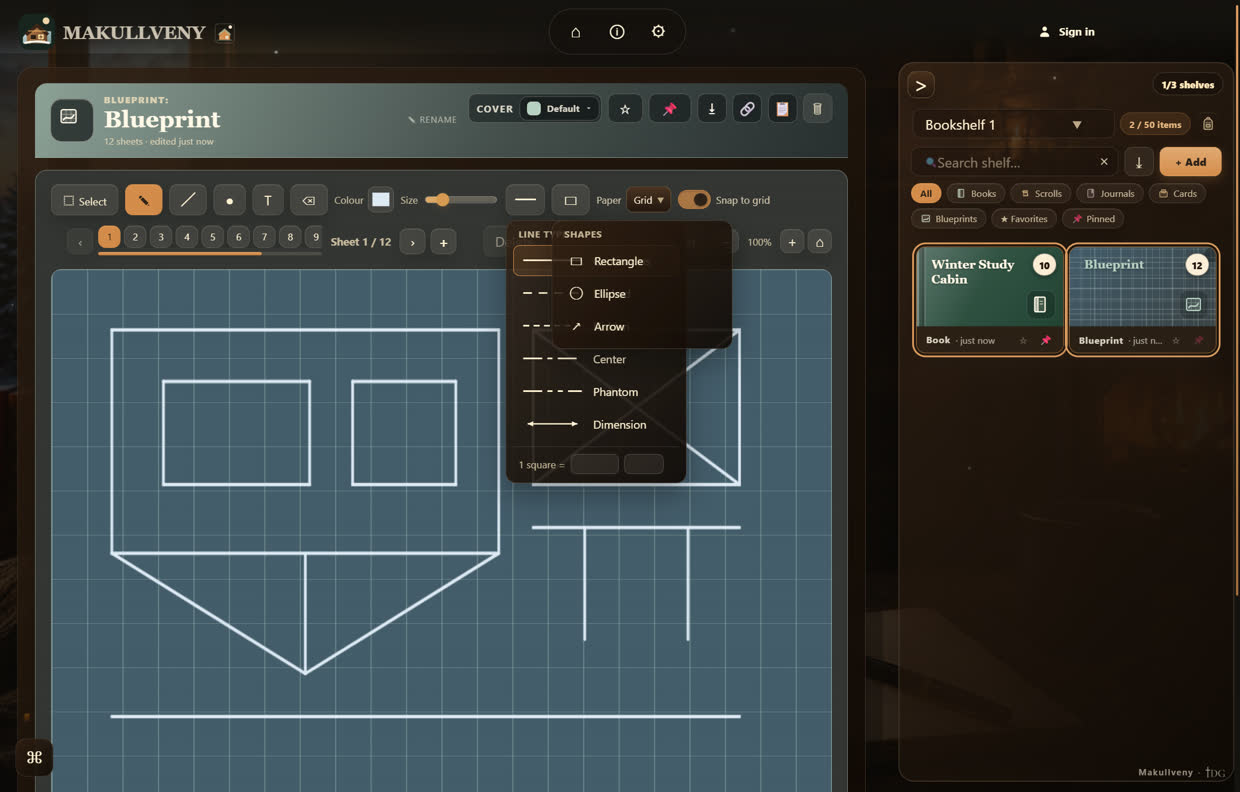
BlueprintA drafting sheet for diagrams, floor plans and anything a lined page fights you on. Snapping grid, real line types, real shapes.
Why it exists
Twenty minutes go missing between deciding to study and actually studying — finding the file, finding the notes, finding the playlist. Makullveny is the one place they already live, so that twenty minutes goes back into the work.
The dashboard
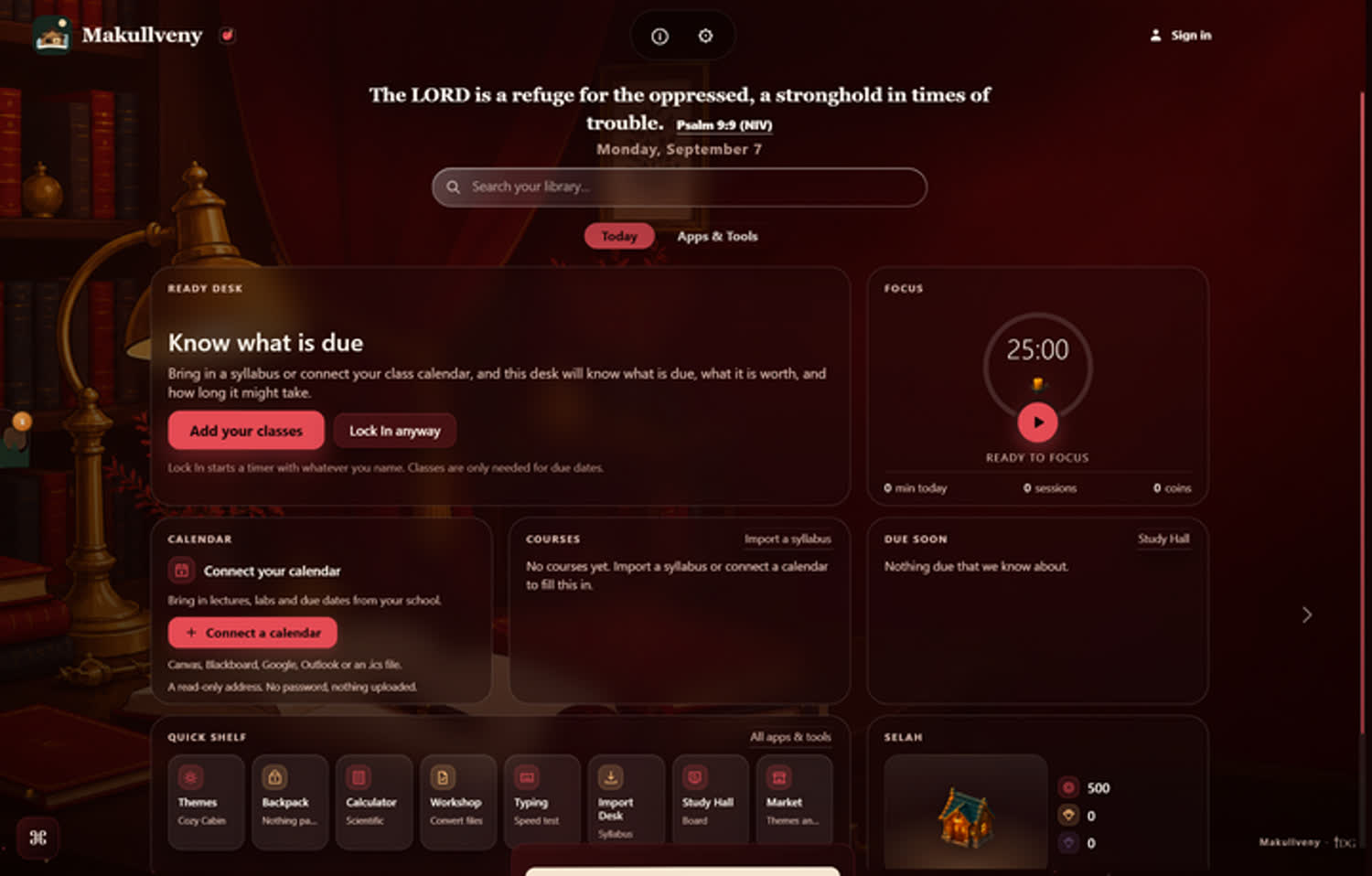
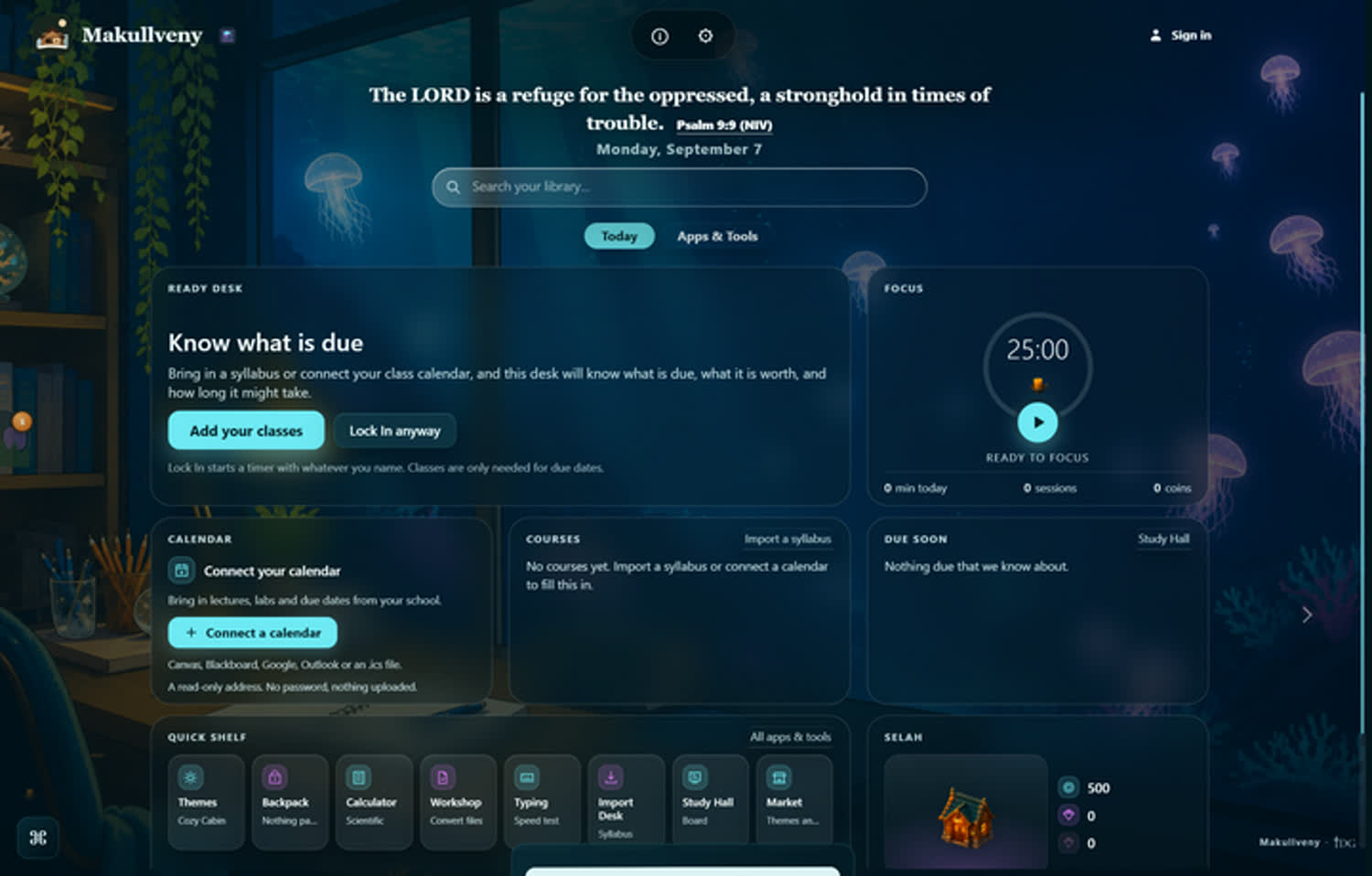
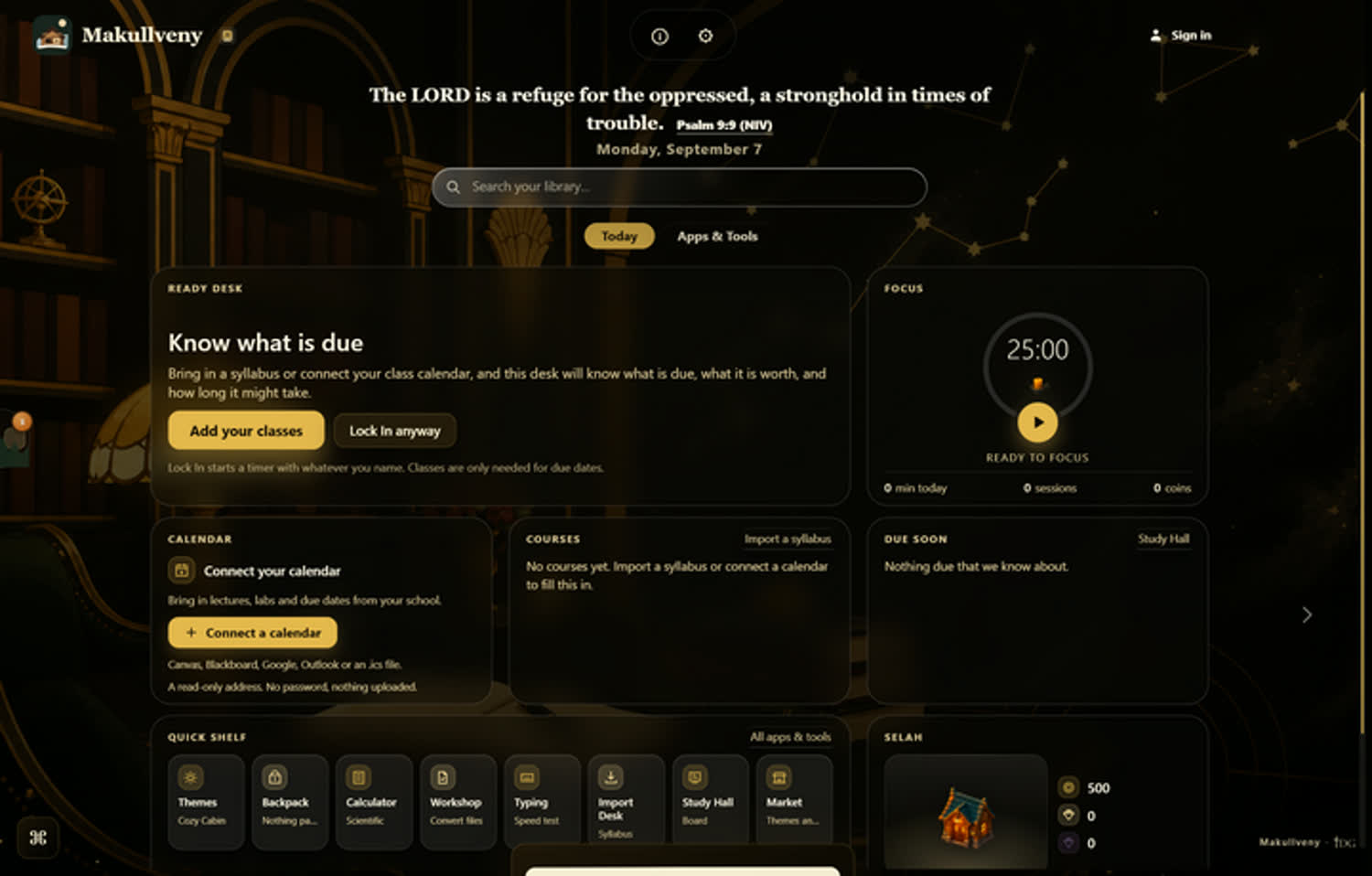
One screen: what to work on and why now, a candle timer for the session you are in, your month, your courses, what is due, the small tools, and the quiet world your focus grows. Every card can be resized, moved or taken off.
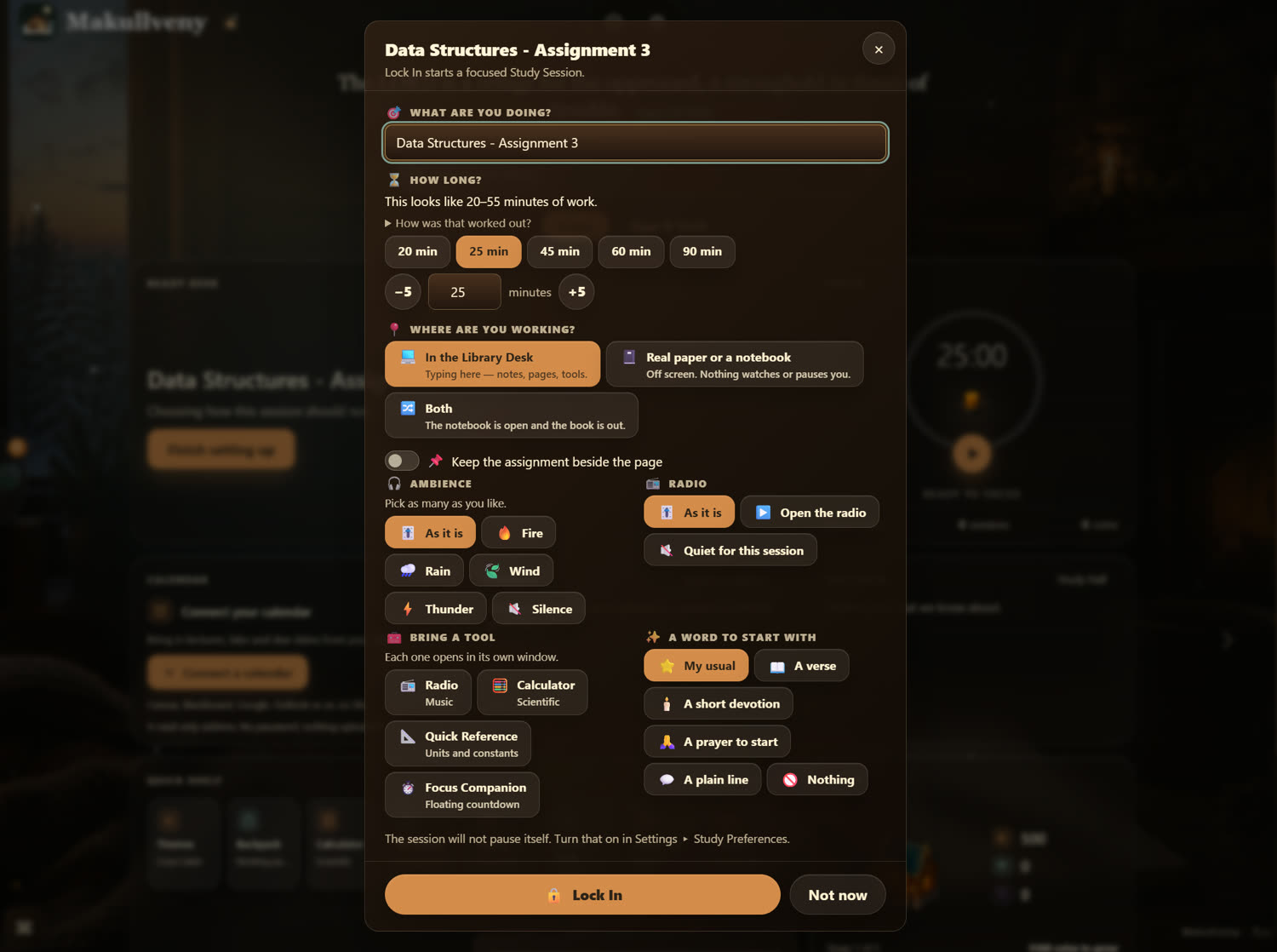
Press Lock In
What are you doing, how long, where are you working, and what do you want on while you do it — a length, real paper or the Library Desk, ambience, the radio, a tool or two in their own windows, and a line to start with. Answer it once and the session is built. Everything you pick is remembered for the next one.
Selah: Study Grounds
Selah is a visual record of the hours you actually put in. Not a streak you can break, not a chart, not a number that shames you — a home base that gets a little more built every time you sit down. The focus timer lives inside it, so studying and building are the same button.
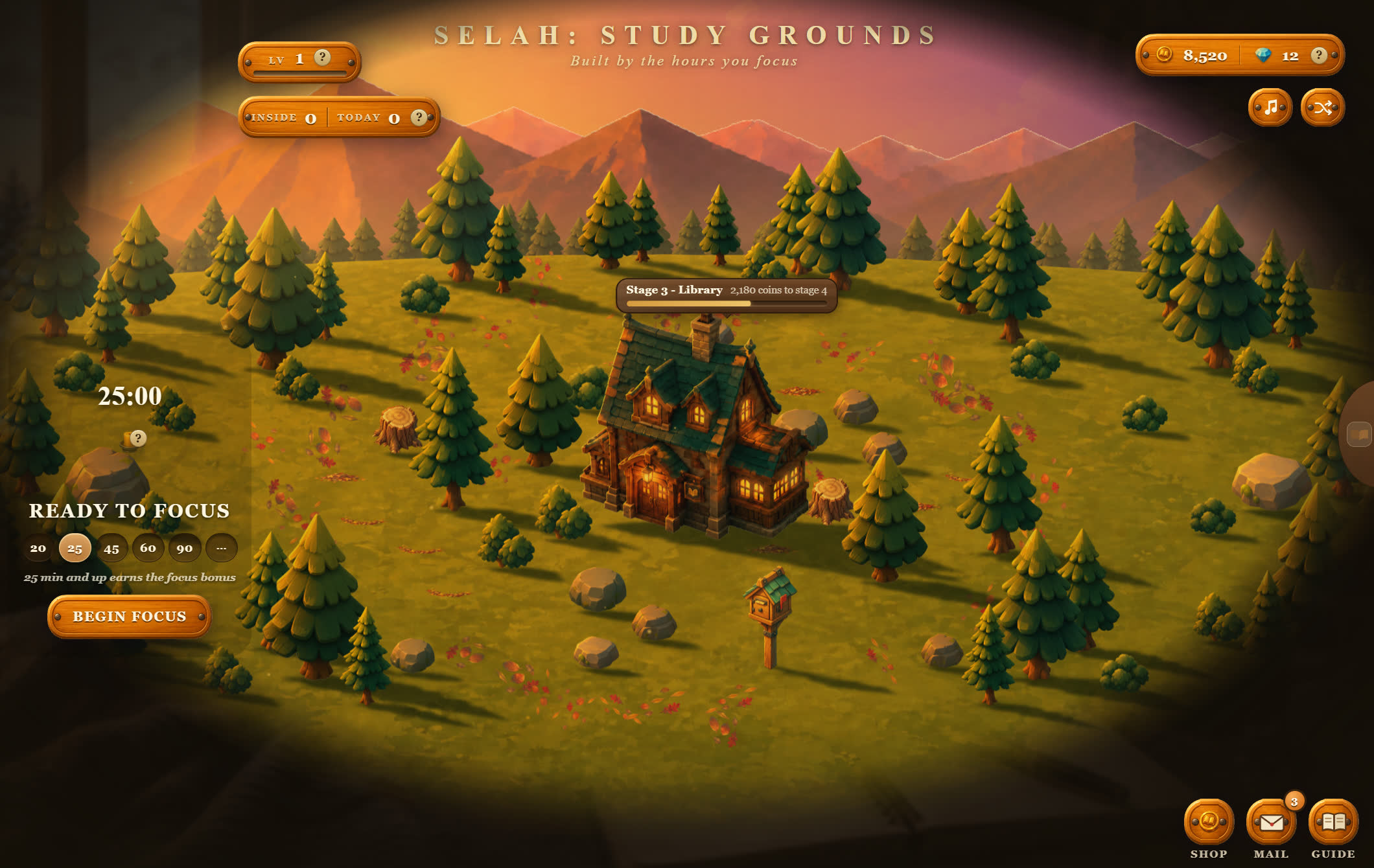
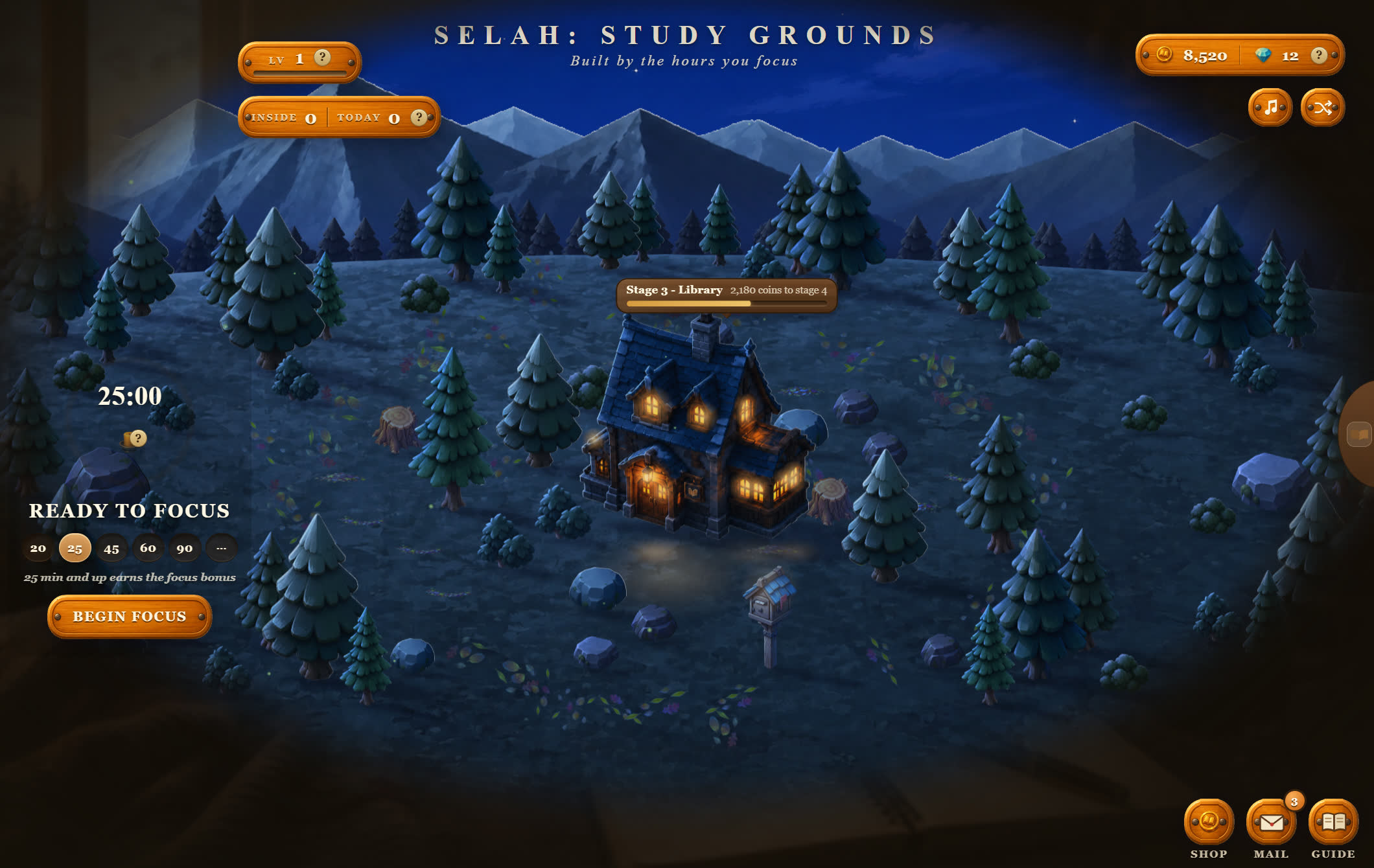
Selah is the word the Psalms use for a pause. That is on purpose.
The apps
Not panels in a sidebar — real, complete apps with their own space, their own state, and their own way of getting out of your way.
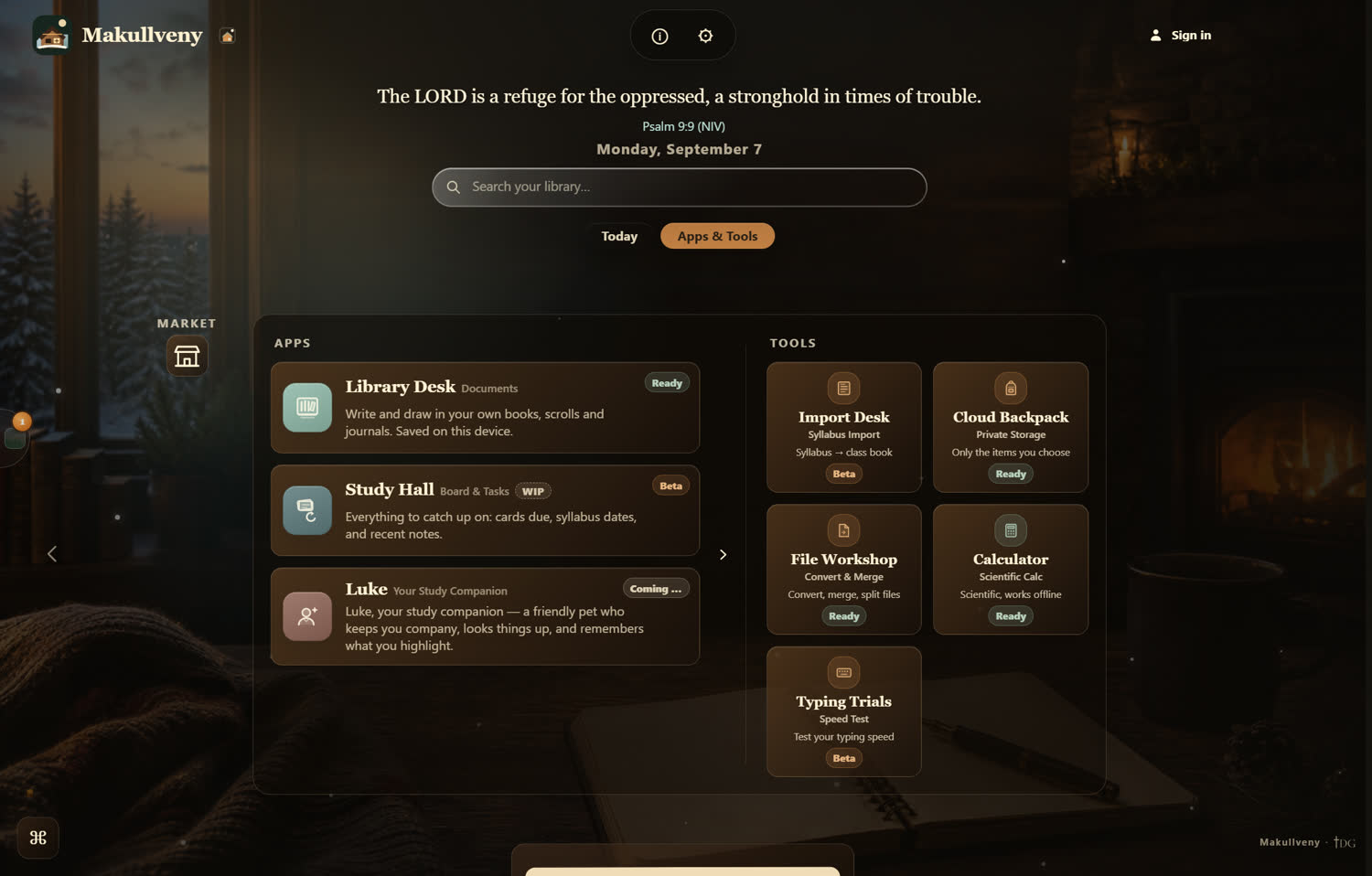
Everything the app opens, and exactly what state each one is in. Nothing on this page is promised that is not on that screen.
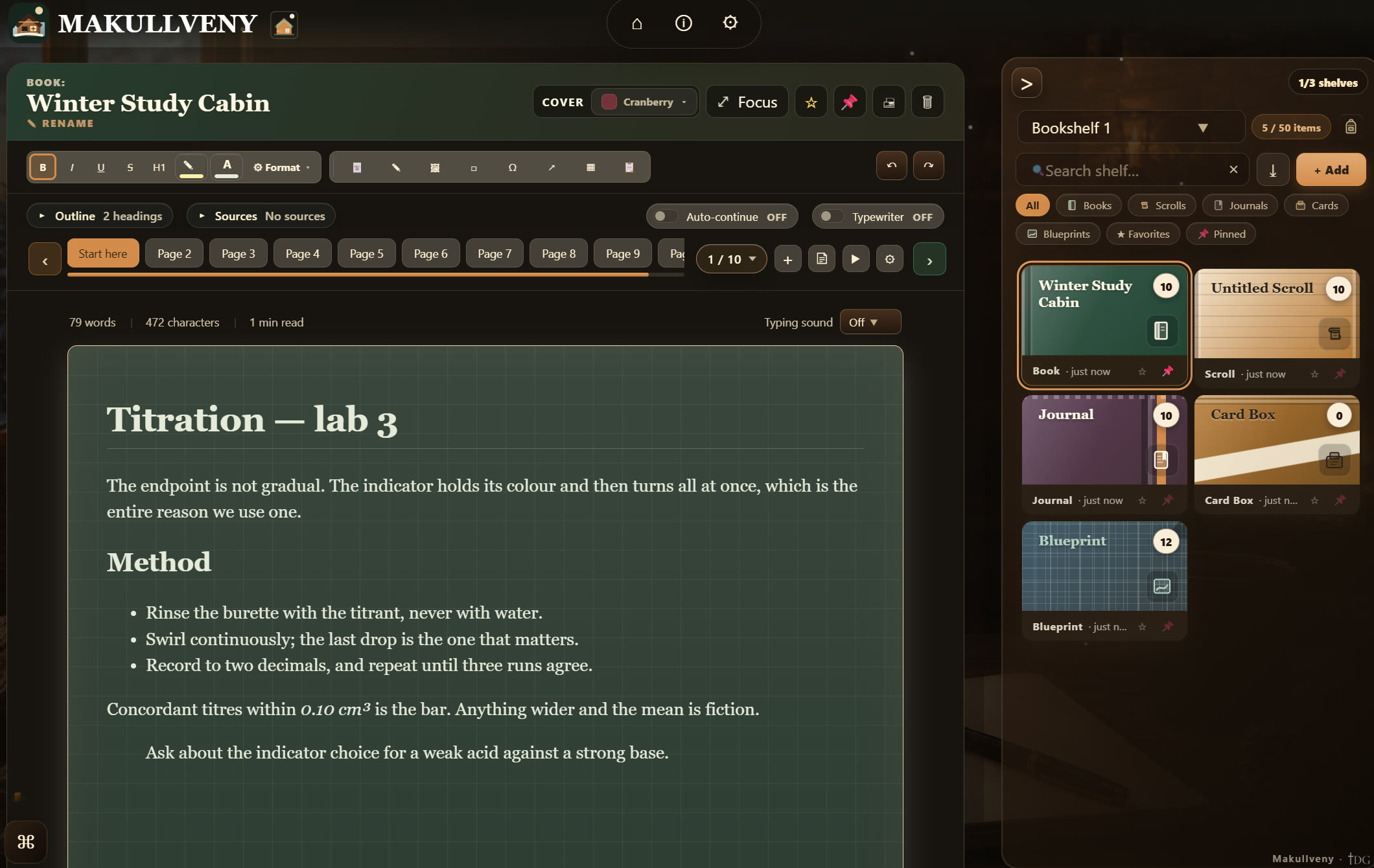
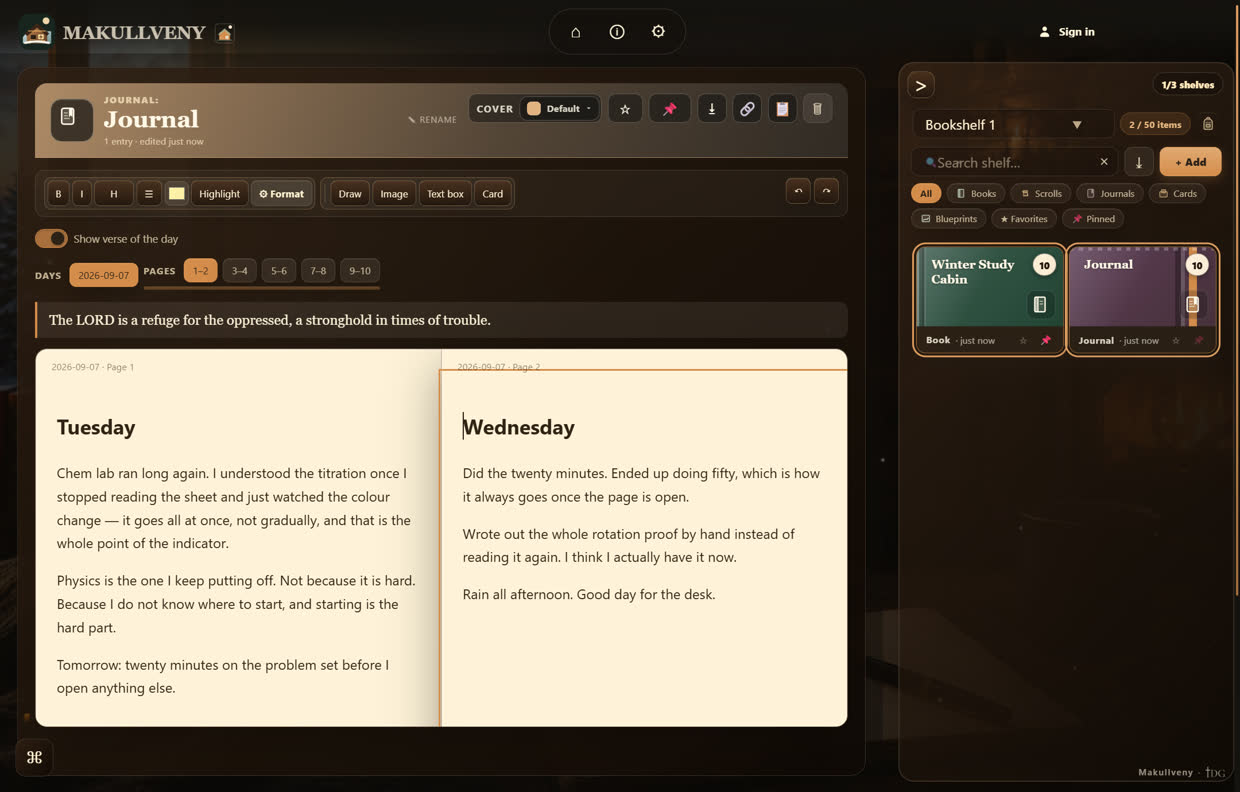
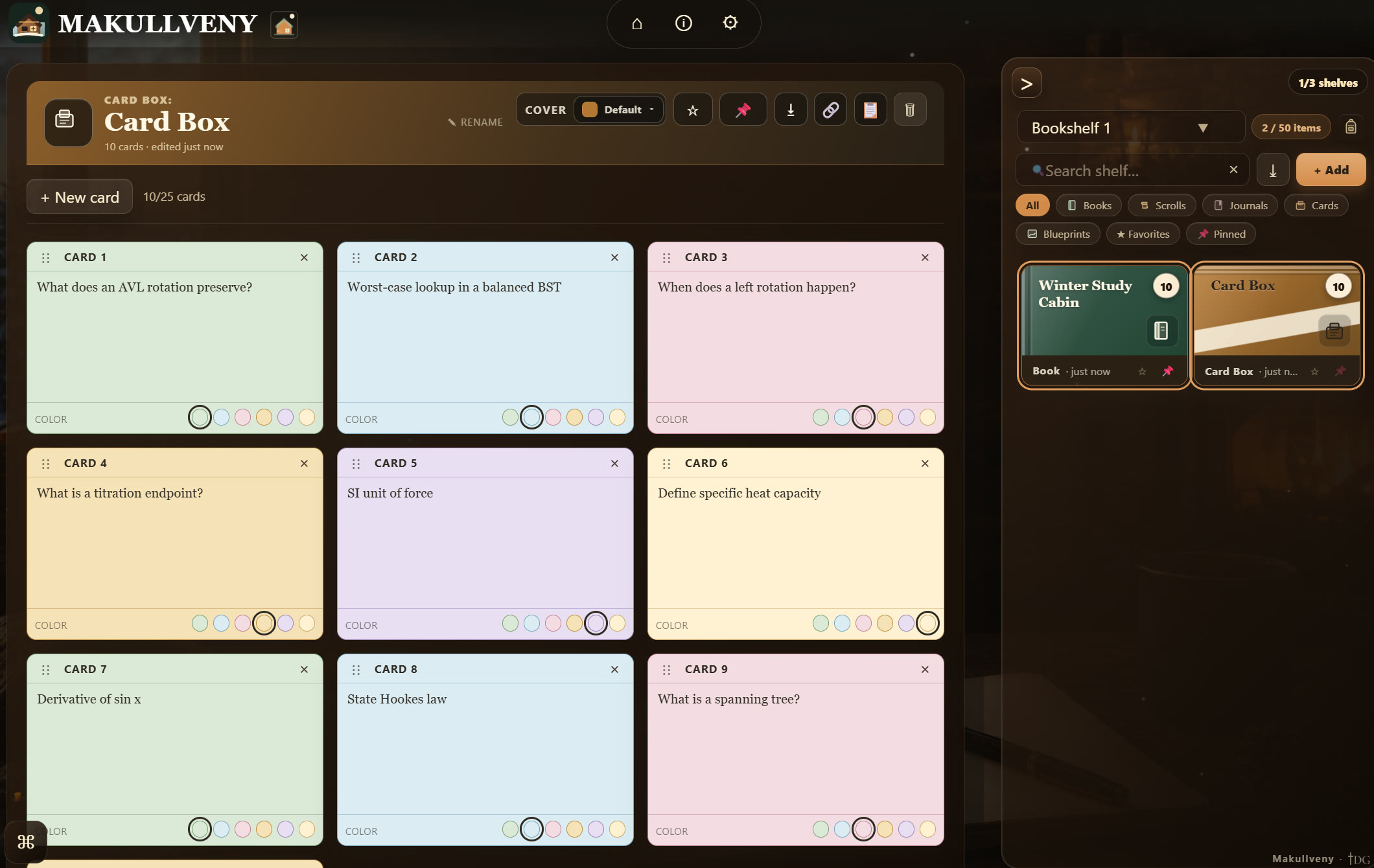
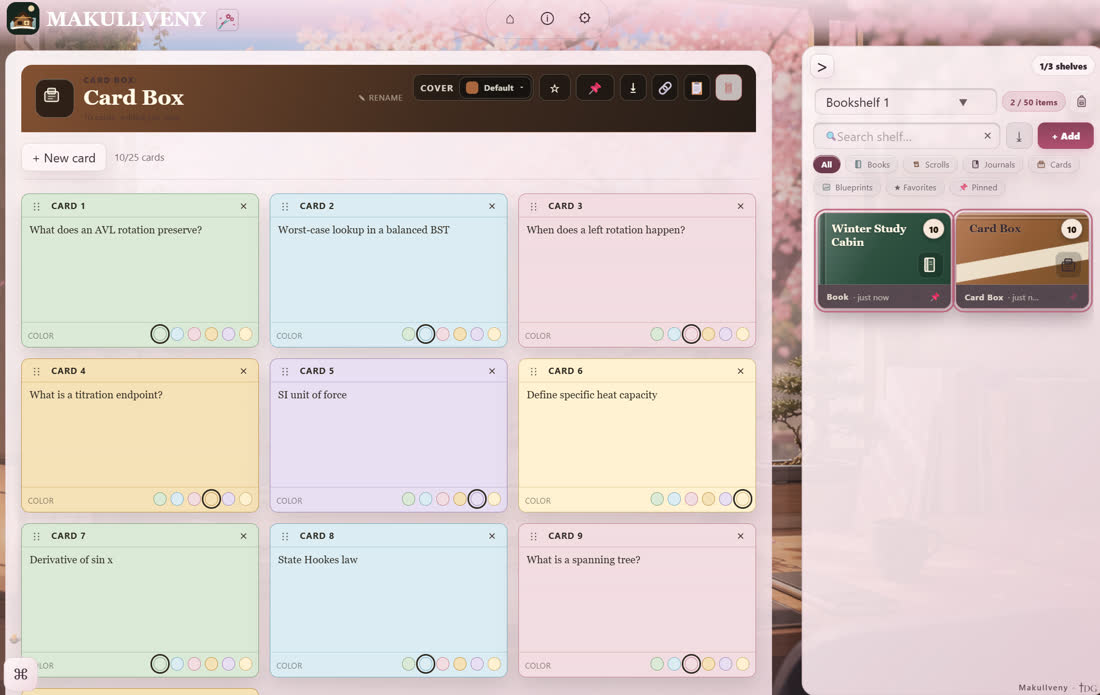
Bookshelves that hold books, scrolls, journals, card boxes and blueprints. Pages take rich text, drawings, pasted images and text boxes — and the paper always stays the focus, with the tools in the toolbar and the rail rather than crowding the page.
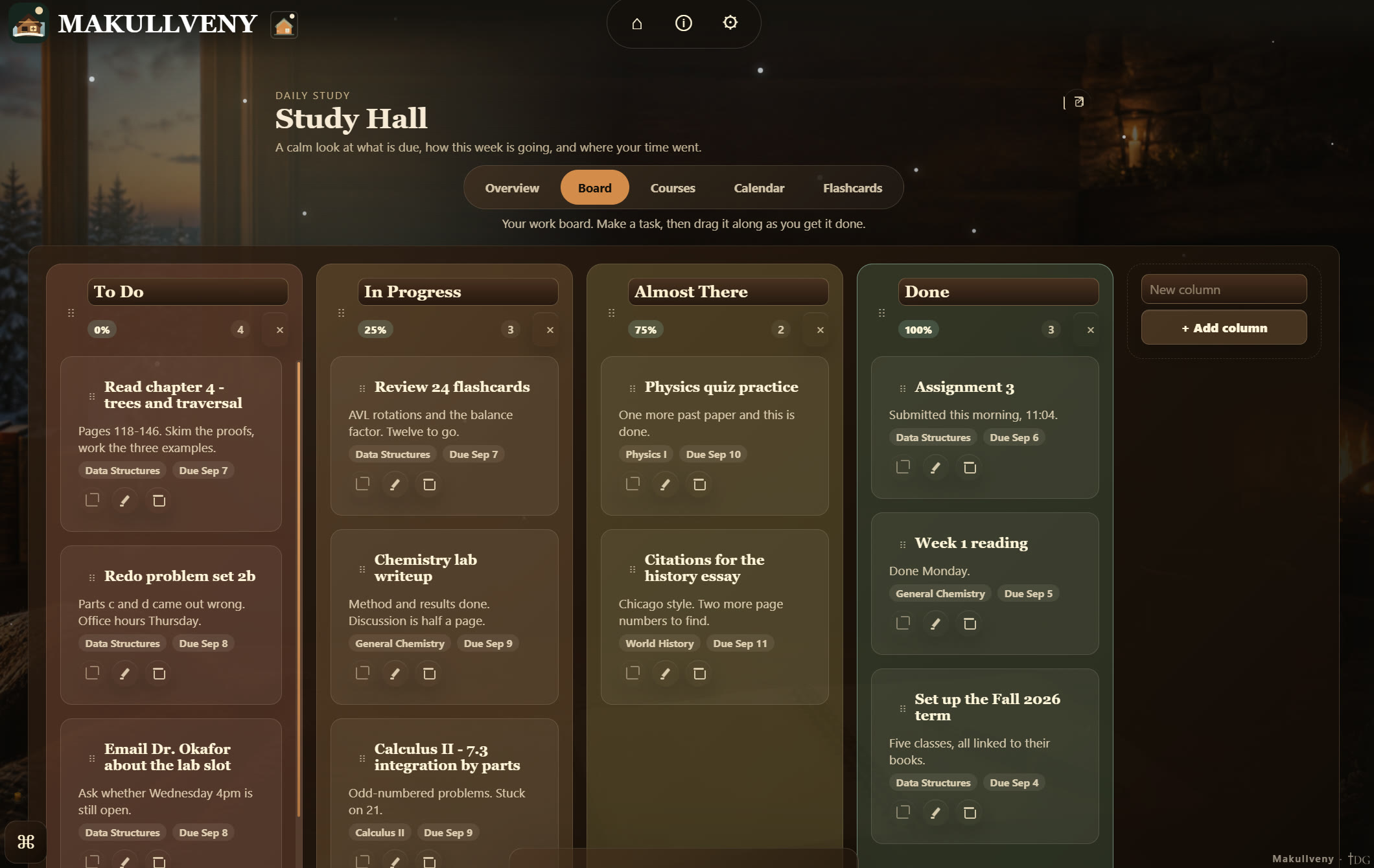
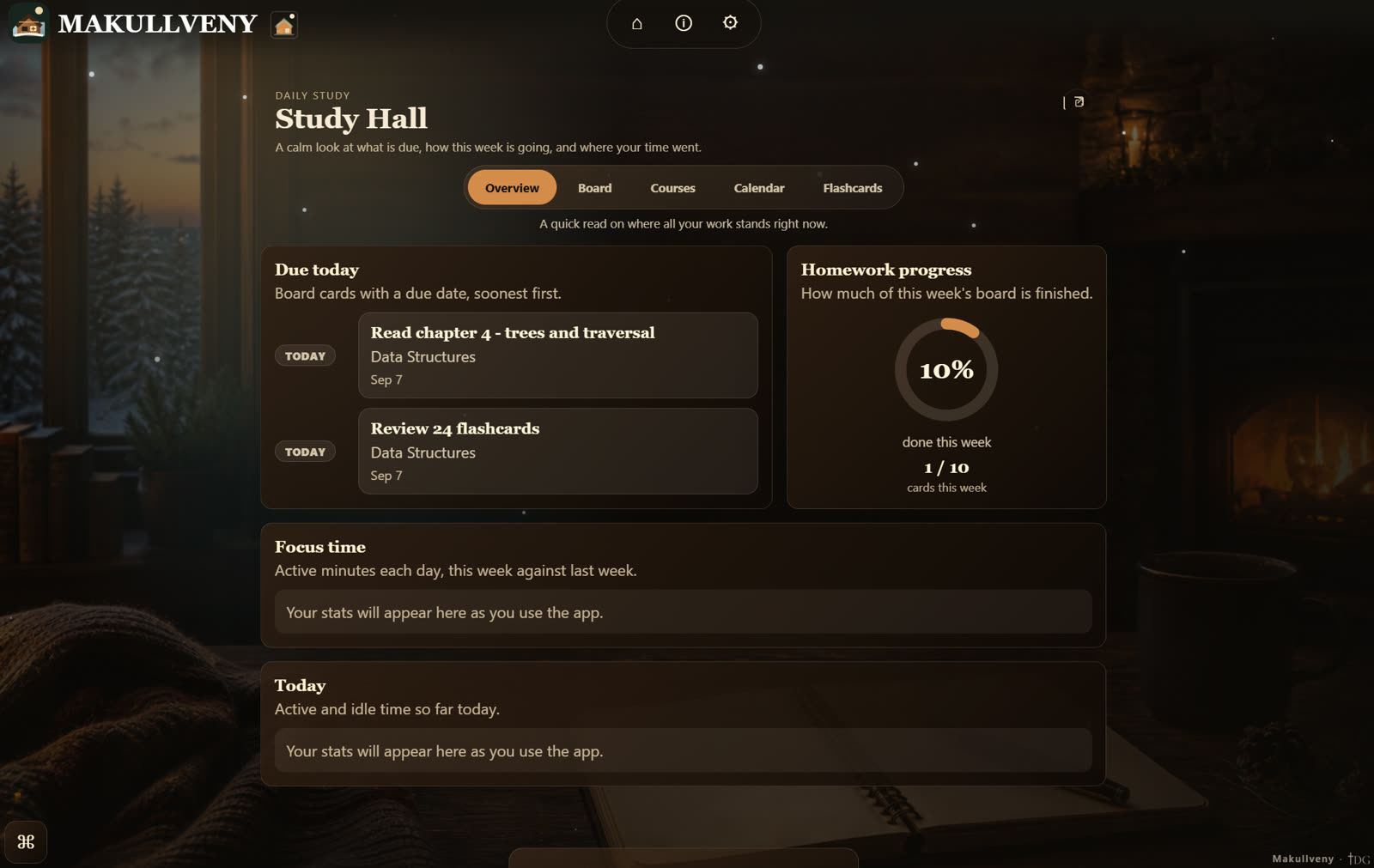
A calm look at what is due, how the week is going, and where your time actually went. Overview, a drag-and-drop board, your courses and your schedule — and it opens in its own window when you want it next to the page you are writing.
The tools
Each one opens in its own window, so it can stay next to the page you are actually writing instead of taking the whole app over.
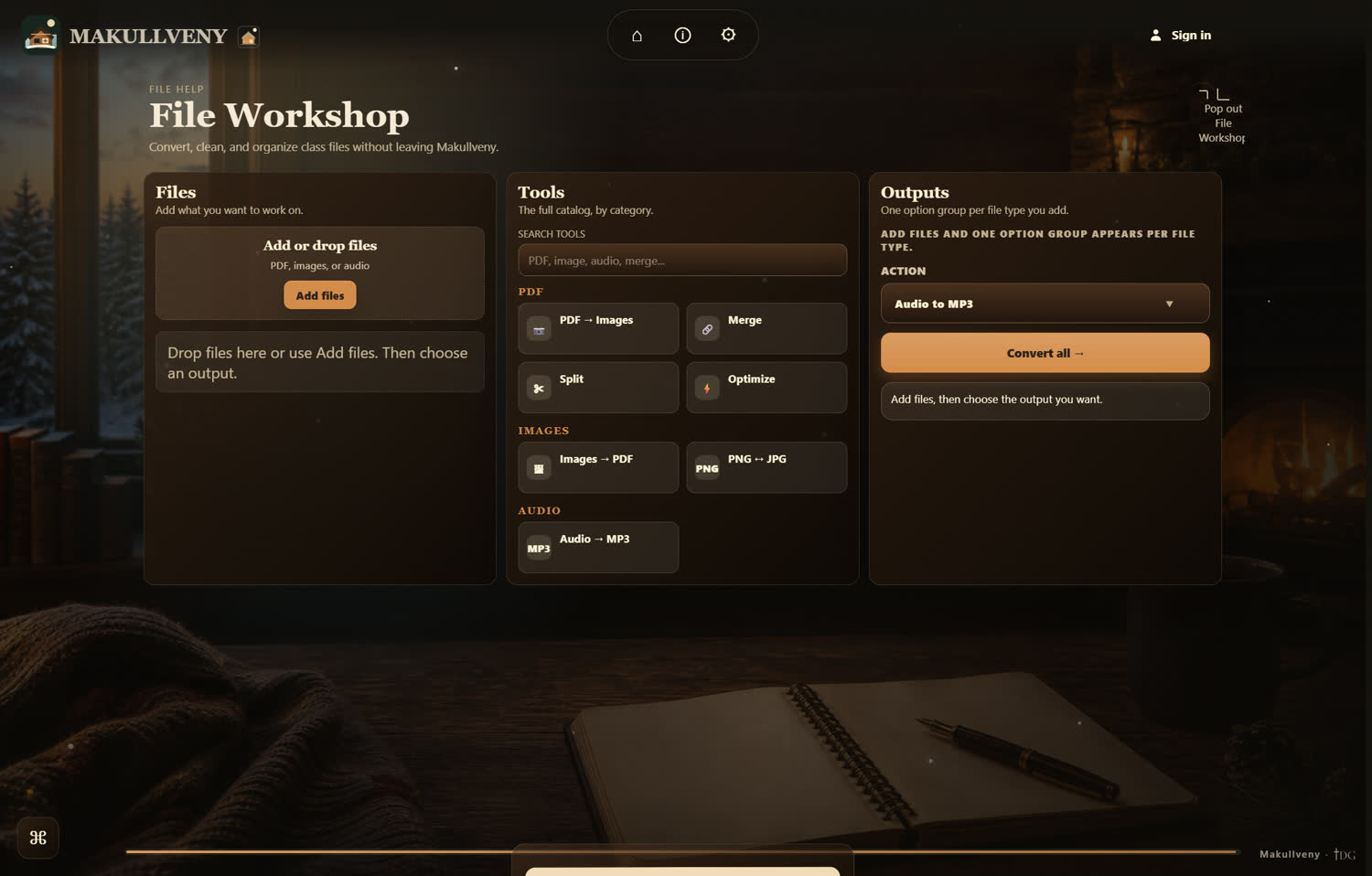
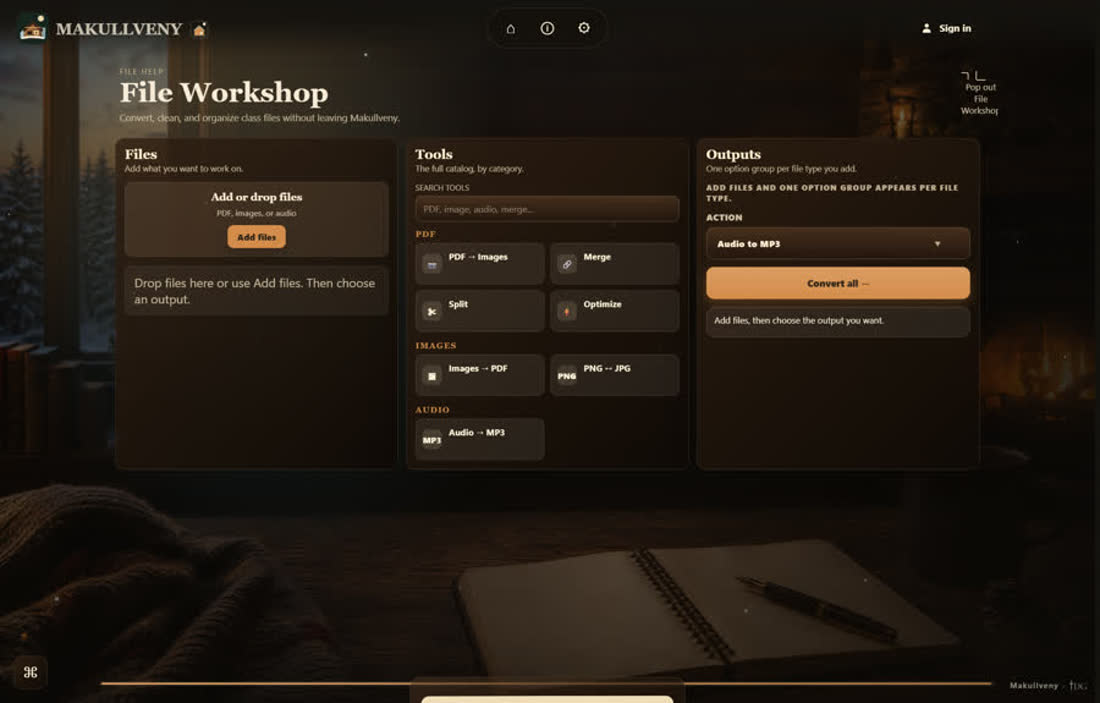
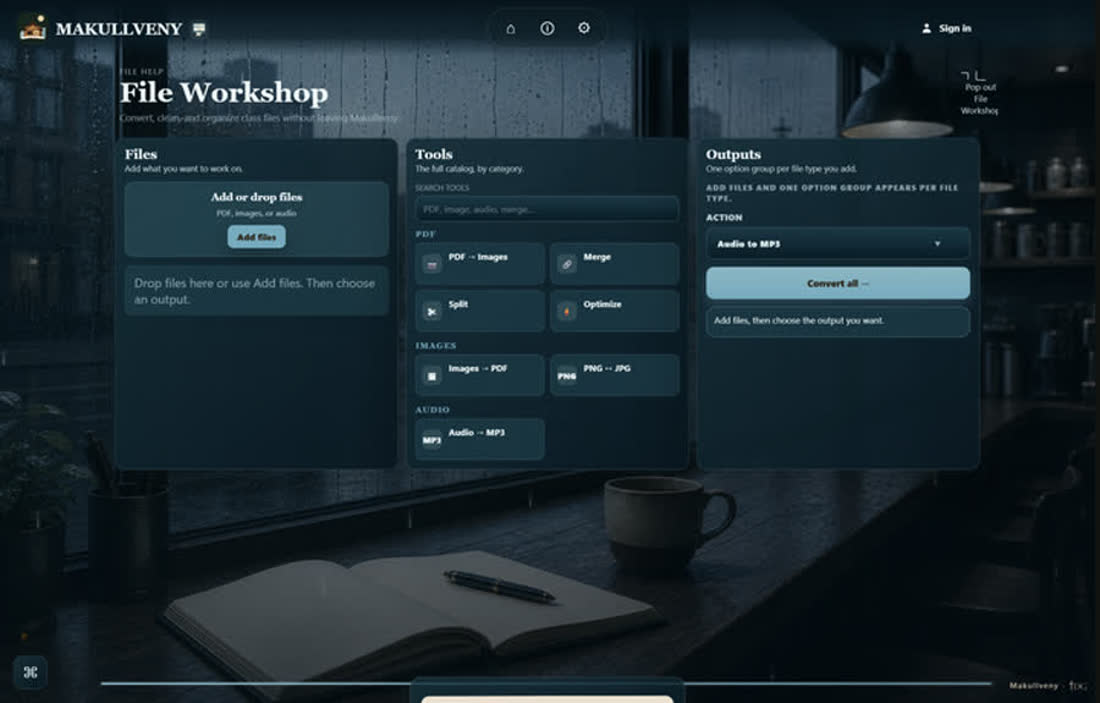
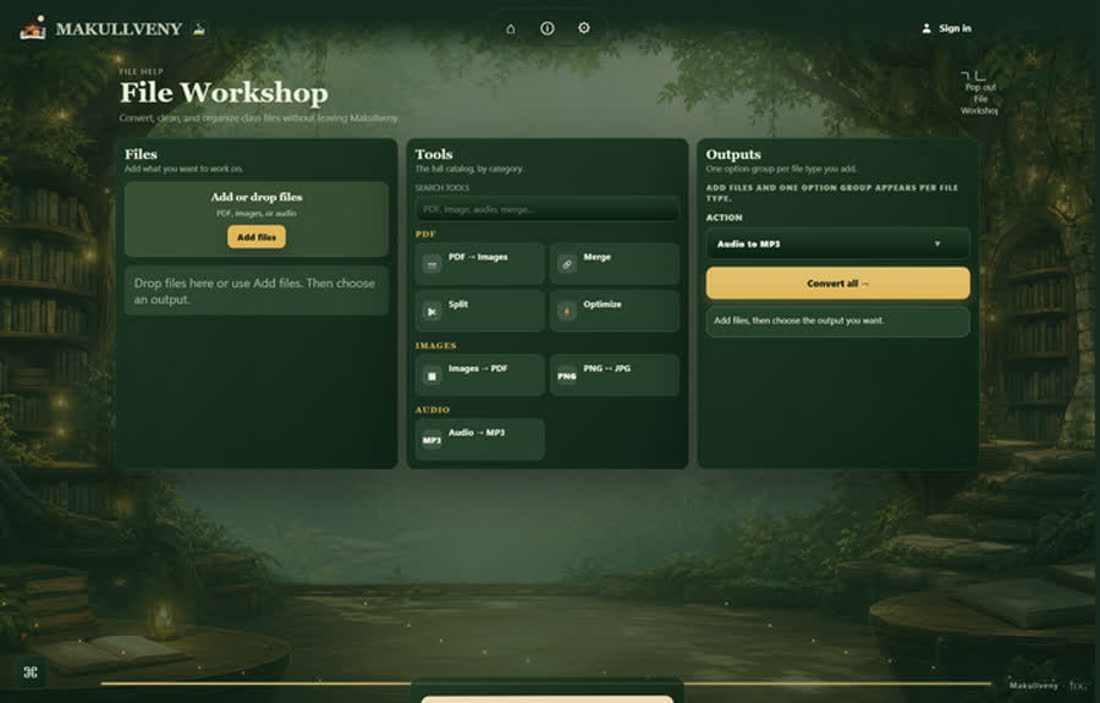
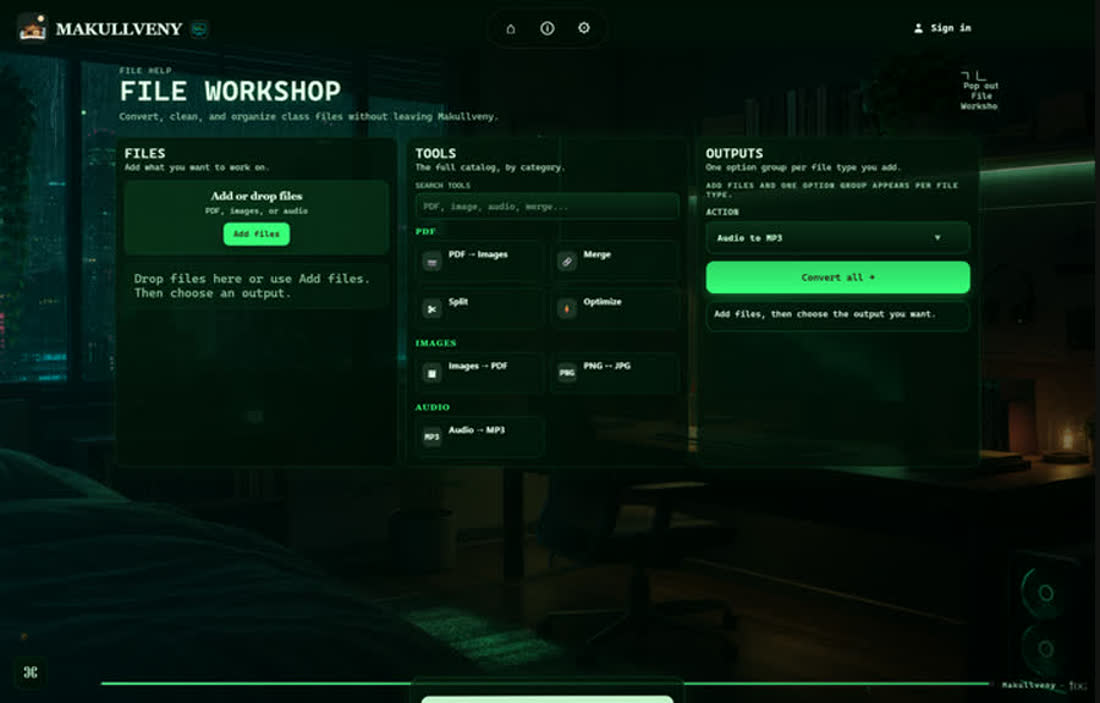
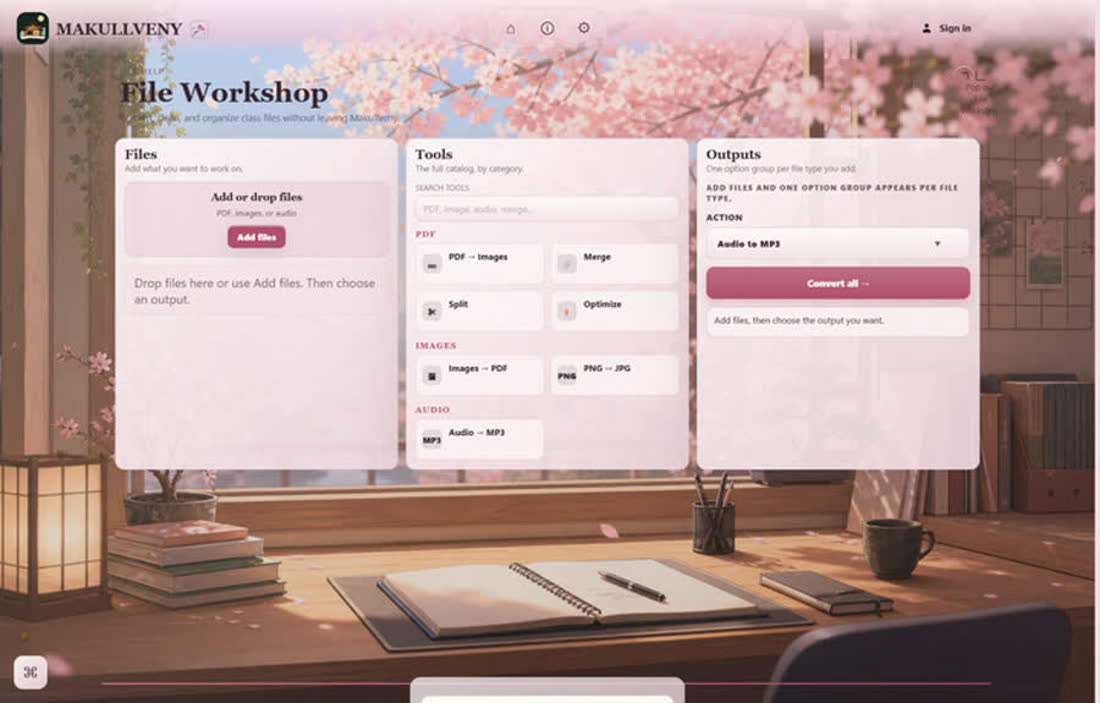
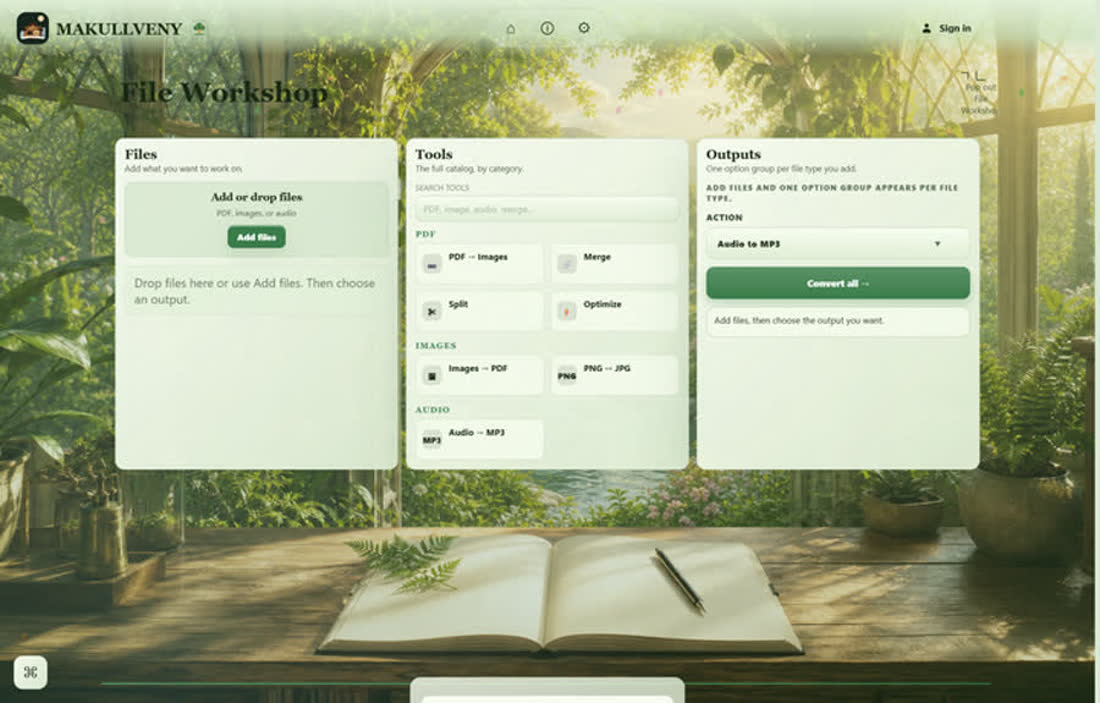
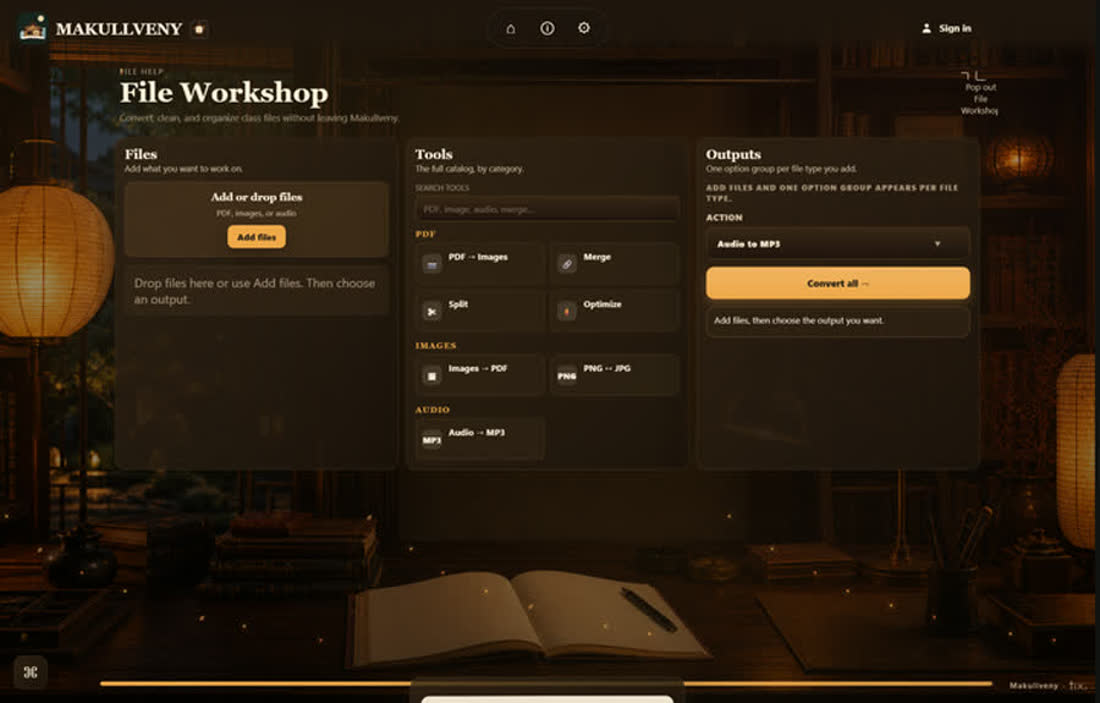
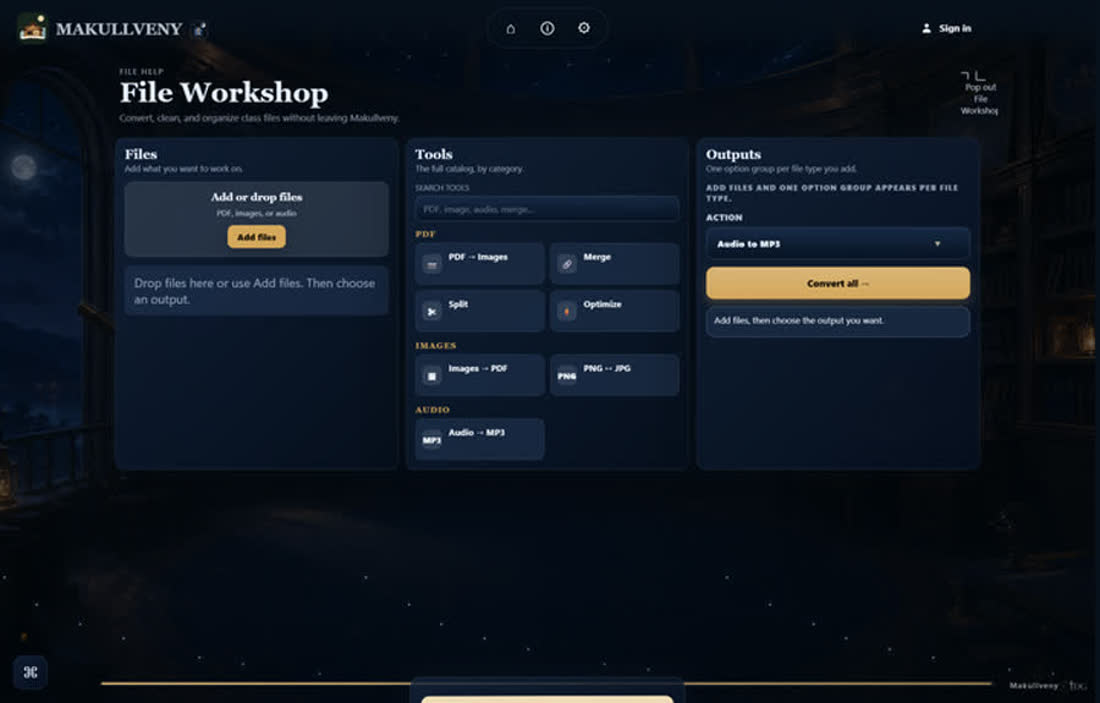
Convert, clean and organize class files without leaving Makullveny. Every conversion runs locally through a bundled FFmpeg — nothing is uploaded, and nothing needs an account.
Drop a syllabus in, tick what to keep, and get a class book, a starter flashcard deck and your dates in one pass.
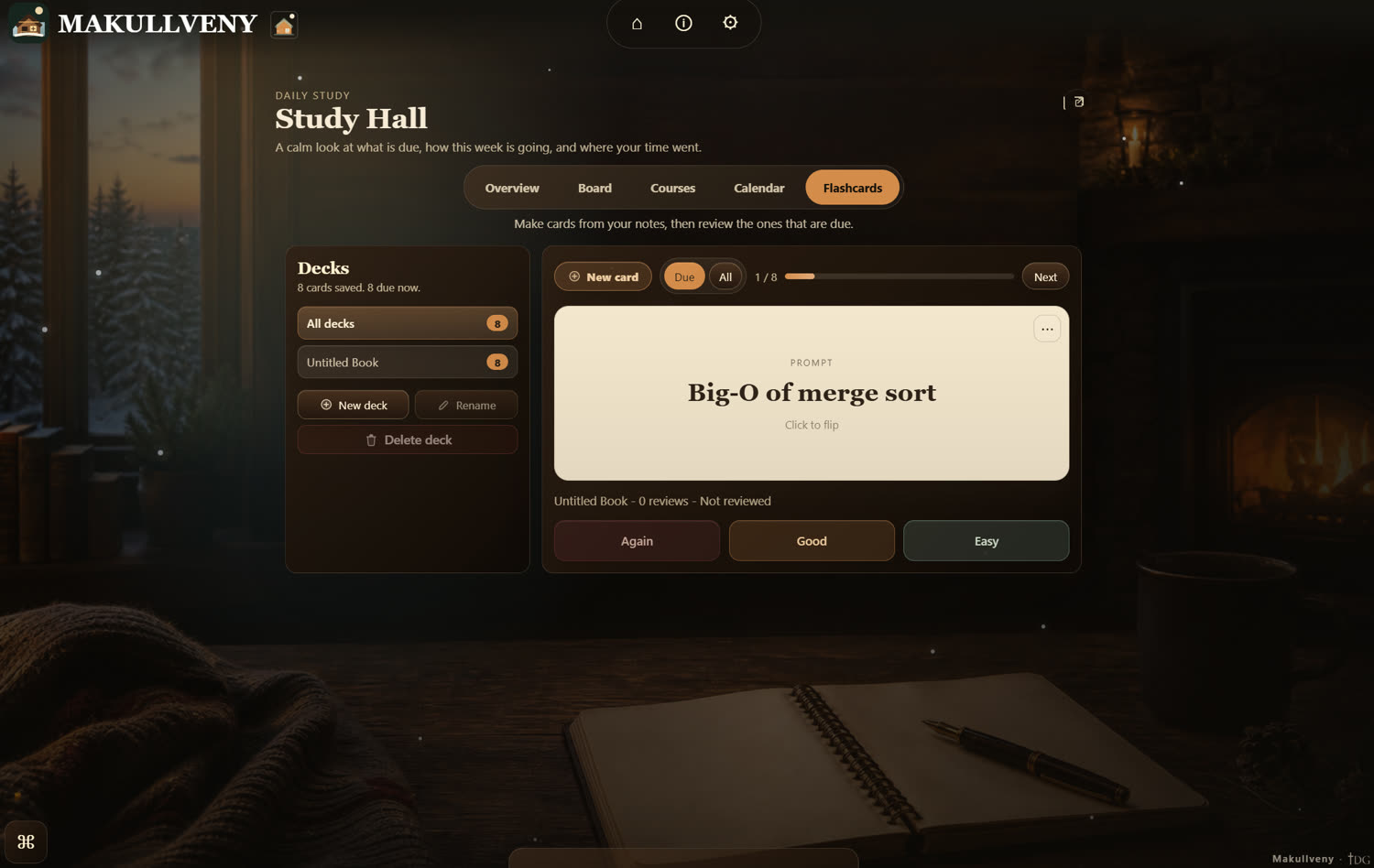
Flip and grade a local deck — Again, Good, Easy — while the Library Desk stays open behind it.
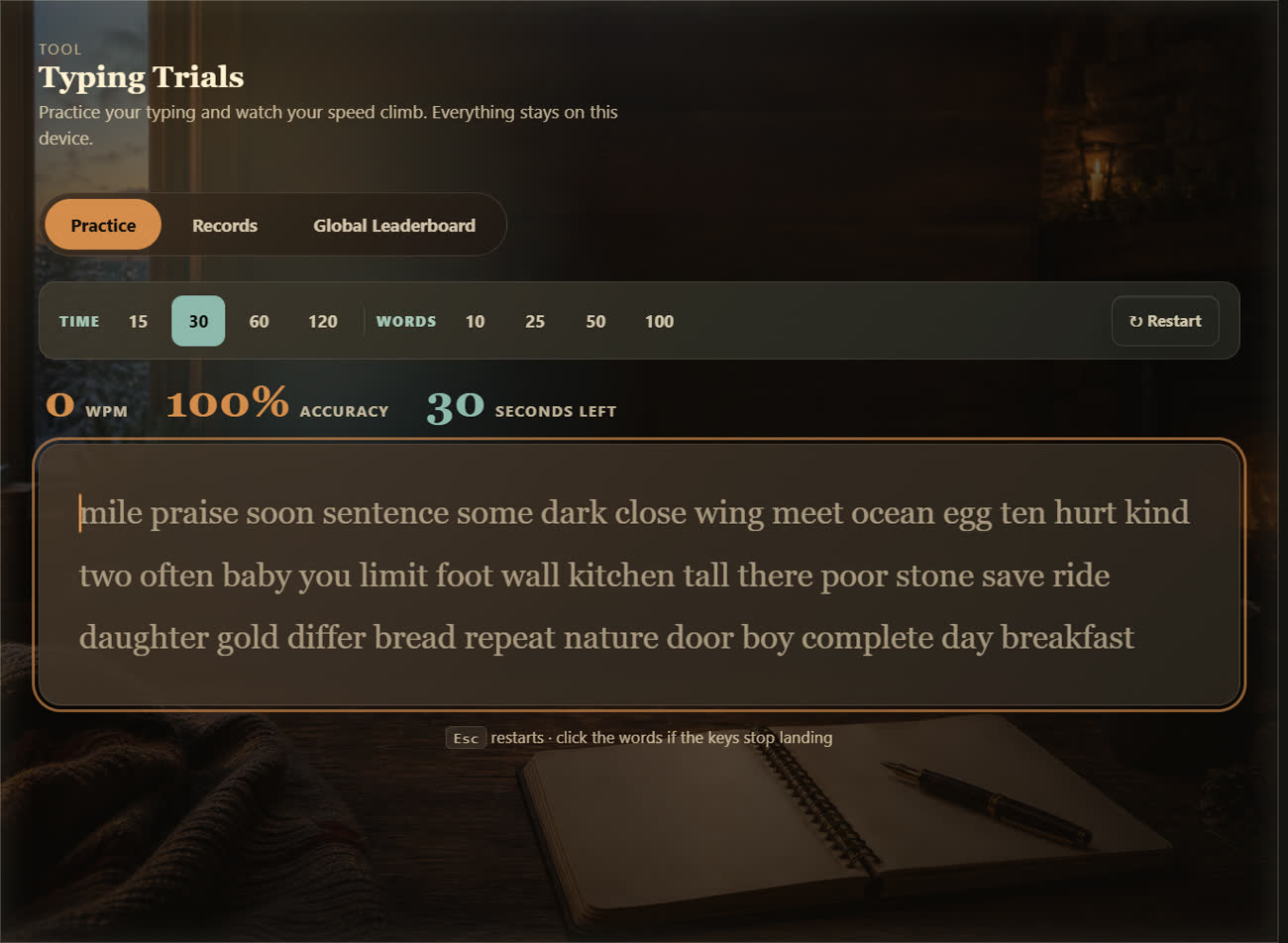
Practice your typing and watch the speed climb. Timed or word-count runs, live WPM and accuracy, records kept on this device.
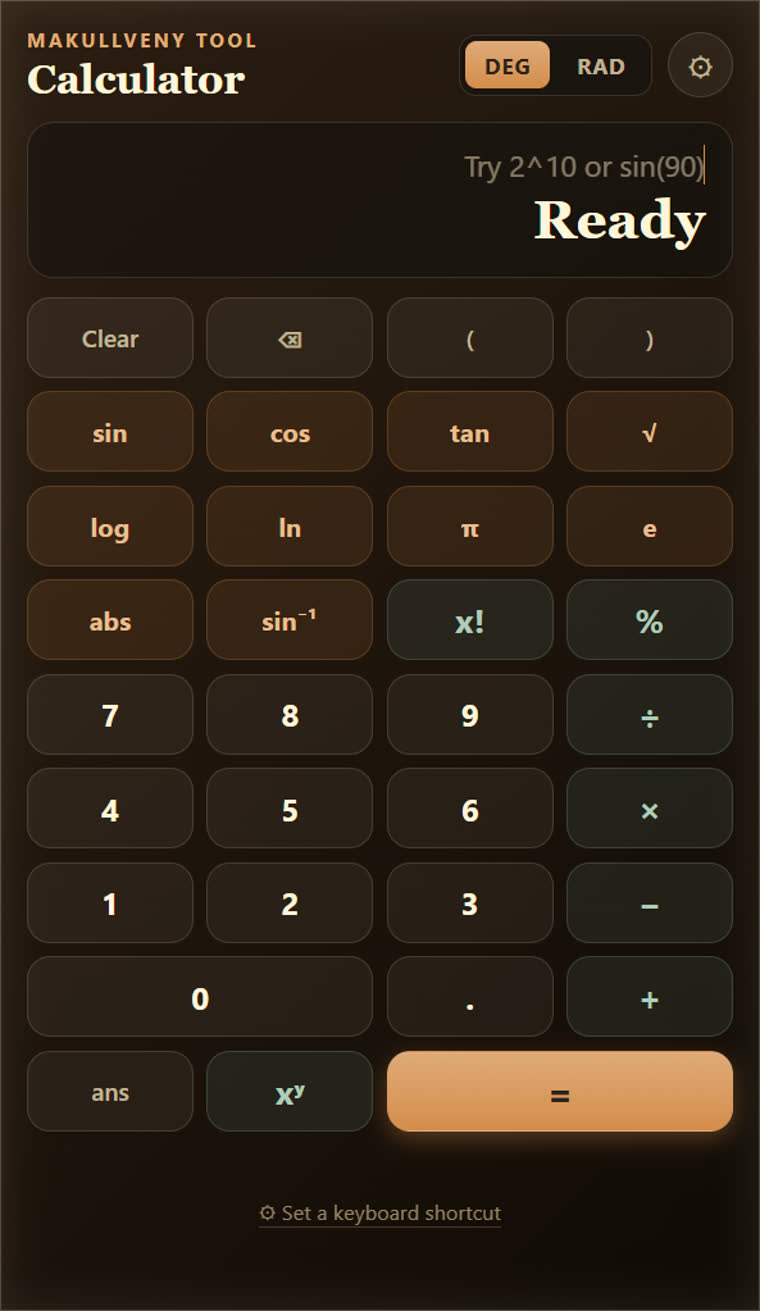
A scientific calculator that works with no connection at all — trig, logs, factorials, powers, and a keyboard shortcut of your choosing.
Atmosphere
The whole app re-themes — background art, paper, typography and chrome all change together, so switching theme changes the room you are sitting in rather than the colour of a button. Choose one on the left to look around it.
The cabin at first light — cool blues, bright paper, quiet.
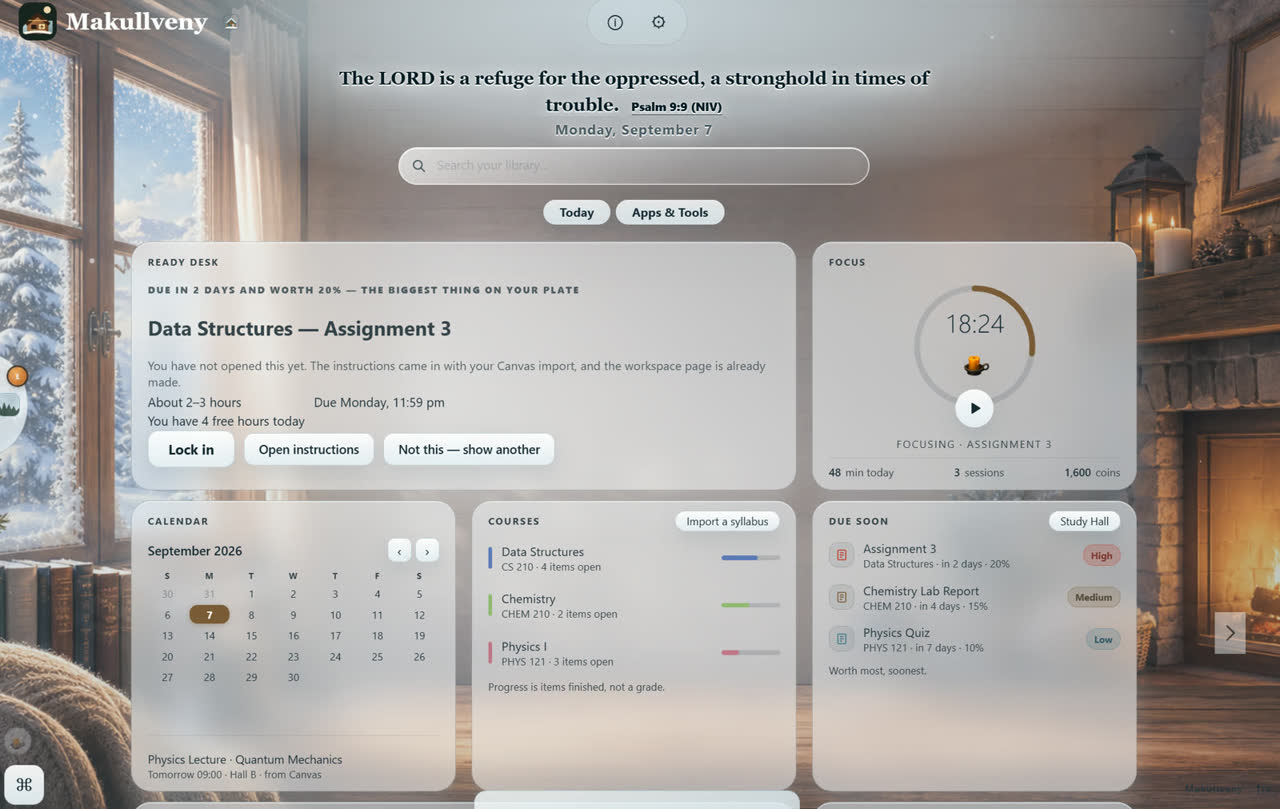
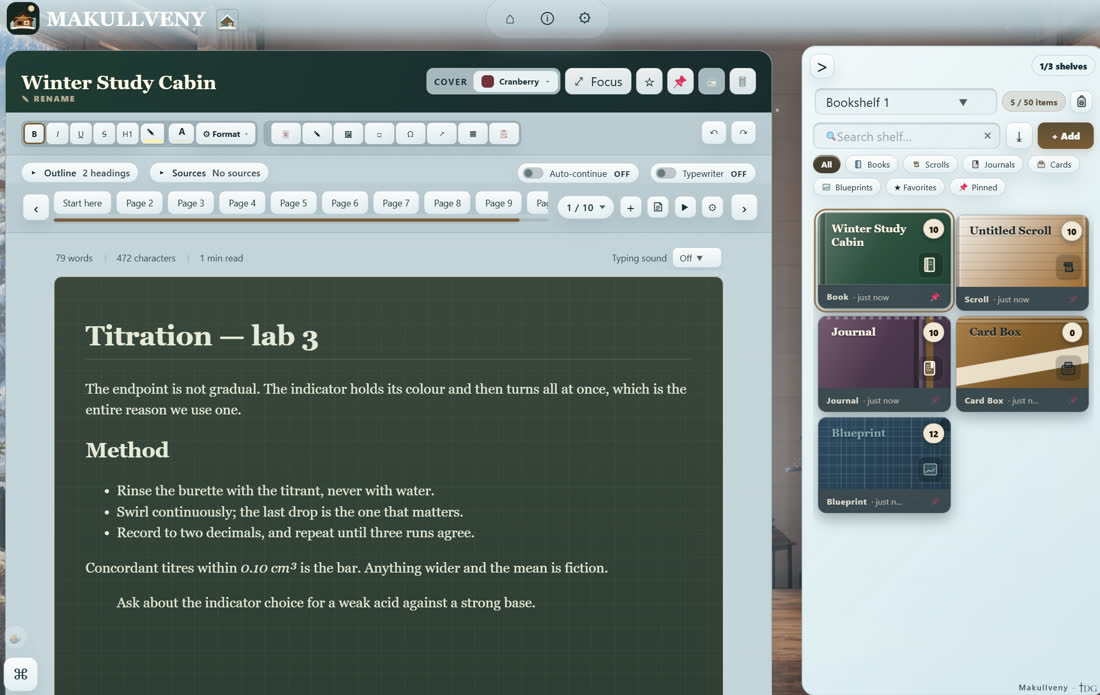
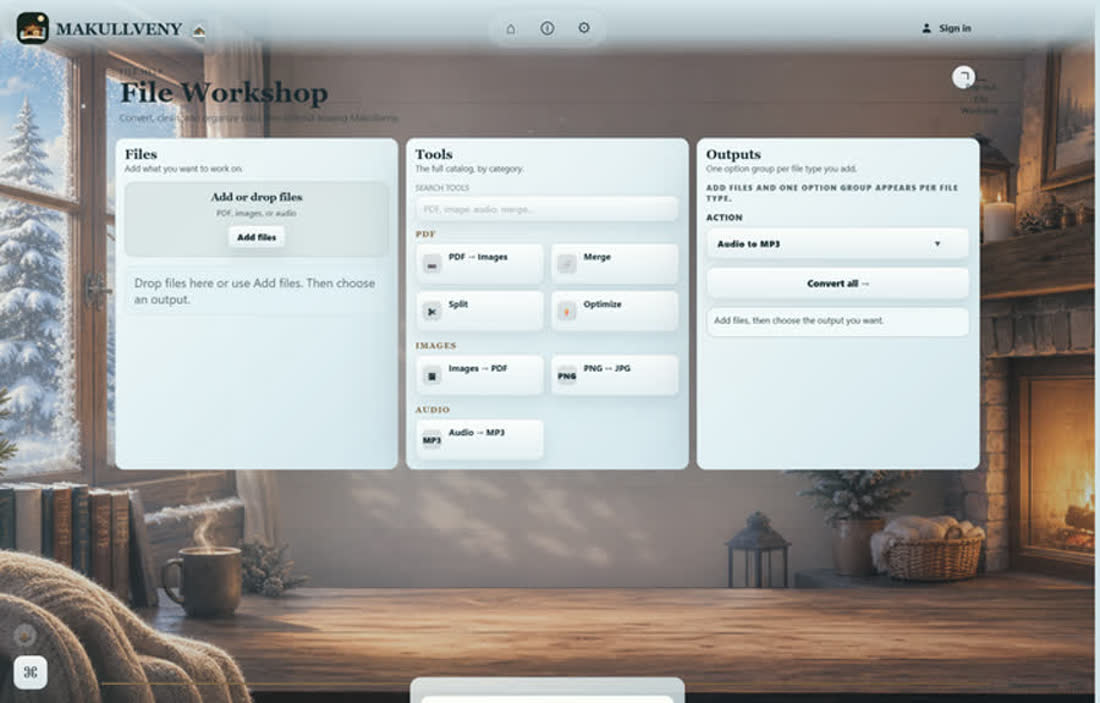
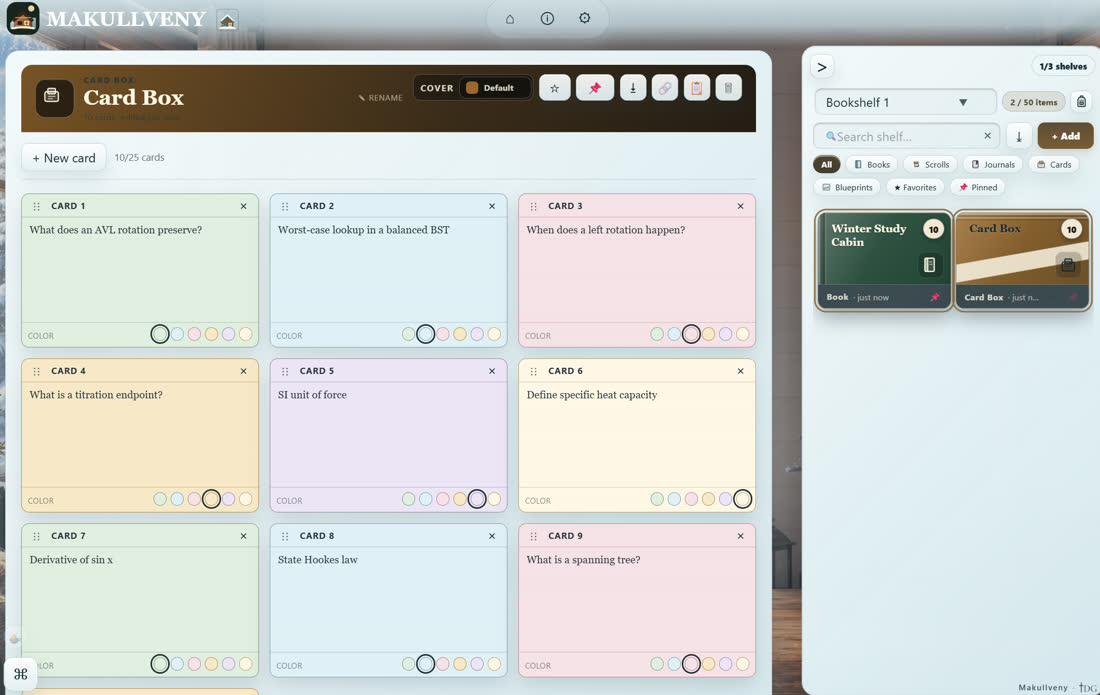
Firelight, walnut and a window full of snow. The room the app opens in.
Overcast blue-grey, and a window you can almost hear.
Muted oak and green shade. Built for long reading.
High-contrast green on black — and the one theme with accents of its own, in pink and blue.
Soft pinks, pale paper and a spring window.
Deep leaf green, with warm light coming through the canopy.
Amber lanterns and dark timber — the warmest room in the app.
Indigo night, brass instruments and a sky worth looking up at.
Theme bundles
Five hand-illustrated rooms are built and waiting on the plans they belong to, and more sit in the in-app Theme Market. The bundles have their own page, room by room.
Sound
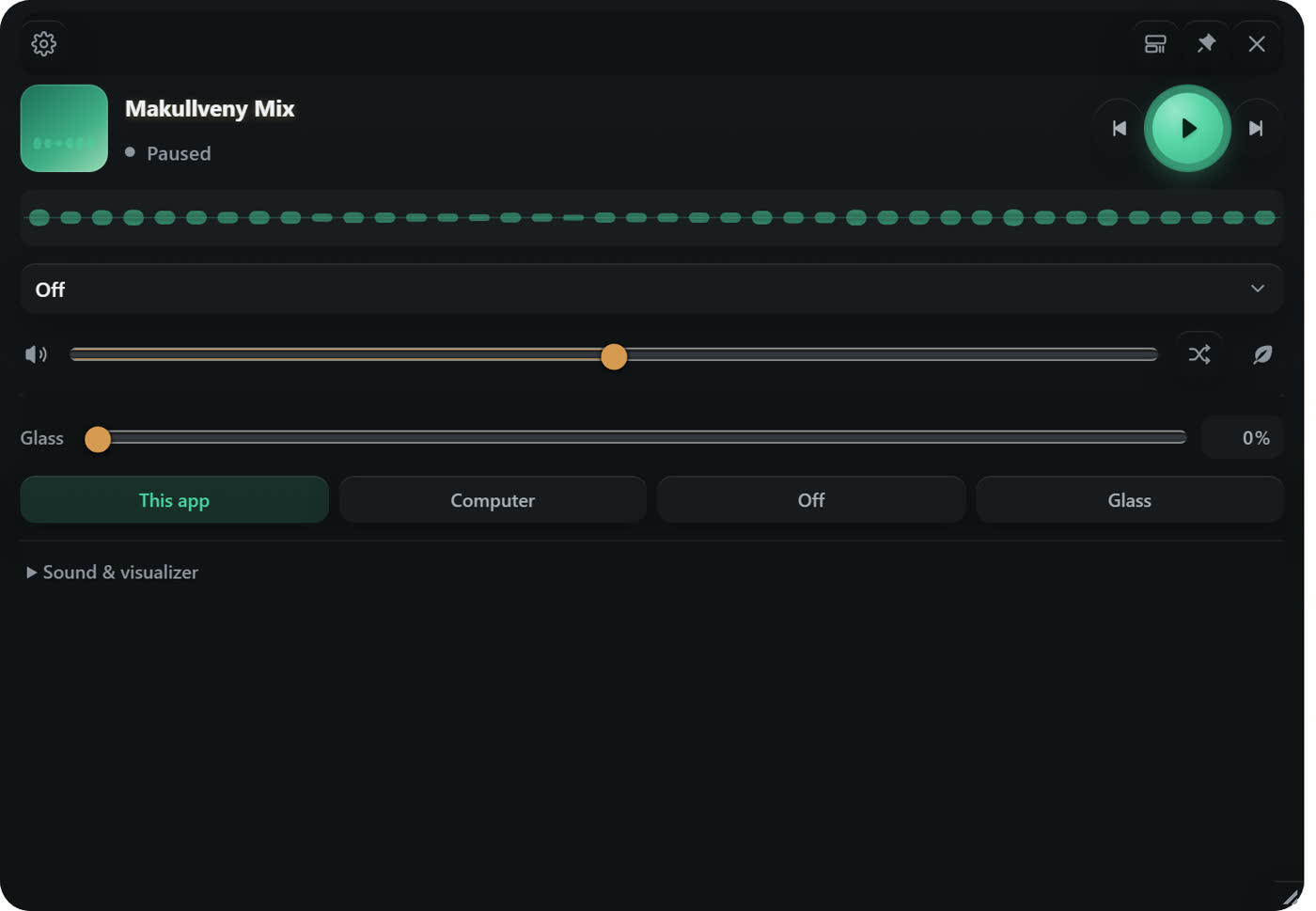
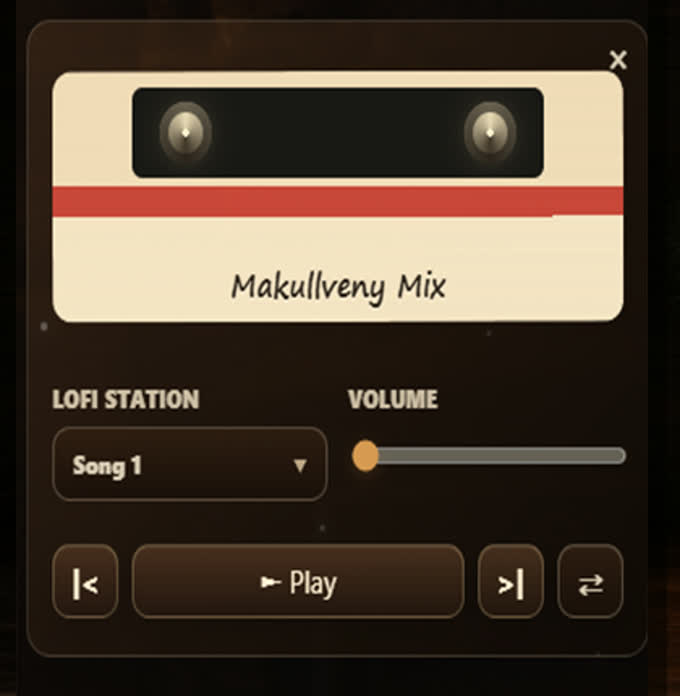
The radio pops out into its own little window with a real visualizer, so the music stays where you can reach it. Ambience layers underneath. And if movement is the thing that distracts you, a reduced-motion mode turns all of it off.
On the workbench
Everything above works today. These three are the next ones landing — listed so you know what is coming, rather than sold as if they were already here.
A friendly companion who keeps you company at the desk, looks things up, converts units, and remembers what you highlight. Local-first, and every module says what it can reach before you switch it on.
Not yet availableOptional backup for your library, so the books on one machine can come with you to another. Off by default, and never required to write.
In progressShare a single page or blueprint by link, and pull your class due dates in from a school calendar during the syllabus import.
In progressWhy we built it
“The LORD is a refuge for the oppressed, a stronghold in times of trouble.” Psalm 9:9
Makullveny opens on a verse. Not a banner, not a pop-up — one line at the top of your desk, under the light, before the work starts. Selah, the world your focus grows, takes its name from the pause the Psalms keep asking for.
Makullveny is built under TDG — The Disciples of God.
Download
Free, and it stays free. Makullveny is new and ships most weeks, and this page reads the release list itself — so what you see below is the latest build for your system, not a number somebody typed here.
This card is what shows before the release list has been read, or with scripts off.
Makullveny is not code-signed yet — signing certificates cost more than this project makes, which is nothing. Both systems will stop the first launch. Here is the way past, once.
xattr -dr com.apple.quarantine /Applications/Makullveny.app
The blog
Makullveny ships most weeks. Every release is written up in plain words — what changed for you, not what changed in the code.
Loading the three most recent releases…
Every release since the beginning, newest first, with the download for each one.
Open the full archivePrivacy
Makullveny is local-first by design. This page is a public overview of the project; the app's source is private, and so is everything you write in it.
Books, pages, drawings and study content are stored on your own computer unless you choose to export or move them.
This public page is only a project overview. It does not include the private app source or anyone's study data.
You can write, draw, revise and convert without ever making one. An account only buys you the optional extras — cloud backup and sharing — and the app is complete without it.
About the project, and where a bug goes
It is a TDG project — The Disciples of God, the same two of us behind the other apps on the TDG site. The whole app is a work in progress: we are releasing early on purpose, because we would rather students and friends were using it now and telling us what breaks than wait on a version that never quite feels finished.
So expect bugs — anywhere in the app, not only in the newest parts. When you hit one, telling us is the fastest way it gets fixed, and it is genuinely the main way to support what we are doing: every report, and every person who actually uses the app, is what keeps it moving.
Report a bug at any time. The button opens TDG’s feedback form with Makullveny already selected; you can send the same report from inside the app — Settings → Feedback → Send Feedback — and a reply comes back to you there.
The page you were on and the button you pressed is usually the whole bug.
Screenshots help. So does the exact wording of anything that appeared.
Reports from inside Makullveny carry the version number with them, and the answer lands back in the app.